


- Article published at:
- Article author: Crystal Cheng
- Article comments count: 0
Guangzhou: where the Pearl River meets the world's largest trade fair.
Business Tours › Trade & Manufacturing › Guangzhou
Best for: Trade Fairs · Wholesale Sourcing · Consumer Goods · Automotive
Twice a year, Guangzhou turns into the world's largest showroom.
For more than a thousand years, Guangzhou has been the city where China meets the world. Foreign traders once called it Canton — front door of the old Maritime Silk Road. Today the Canton Tower glows above the Pearl River.
But Guangzhou's real engine is trade. Twice a year it hosts the Canton Fair; behind it sit one of the world's busiest container ports, a dense manufacturing base, and the factory ring that supplies the fair itself.
The world's traders have come here for a thousand years — and still do.
Guangzhou hosts the world's largest trade fair, runs one of China's busiest ports, and sits at the center of a factory ring that supplies the world.
At a Glance
$451B
2025 GDP, +4.0%
28.05M
Guangzhou Port 2025 containers (TEU) — world's top 6
1957
Canton Fair founded — world's largest trade fair, held twice a year
80+
universities, two of them 985s (Sun Yat-sen, SCUT)
Translation: Guangzhou is not just a trading post from history — it is a living hub where the world still comes to buy, and where the factories behind the booths sit a short drive away.
Four Things Guangzhou Does Better Than Almost Anywhere
1. It hosts the Canton Fair — the world's largest trade fair.
Guangzhou's signature is the Canton Fair — the China Import and Export Fair, held here and nowhere else every spring and autumn since 1957. The spring session runs mid-April into early May; the autumn session, mid-October into early November. Each session splits into three phases: electronics and machinery, then furniture and home goods, then garments and food. The 138th session in autumn 2025 filled the Pazhou complex with 74,600 booths and more than 32,000 exhibitors, drawing over 240,000 overseas buyers from 218 countries. If you buy from China, these are the most efficient weeks of the year to meet suppliers face to face.
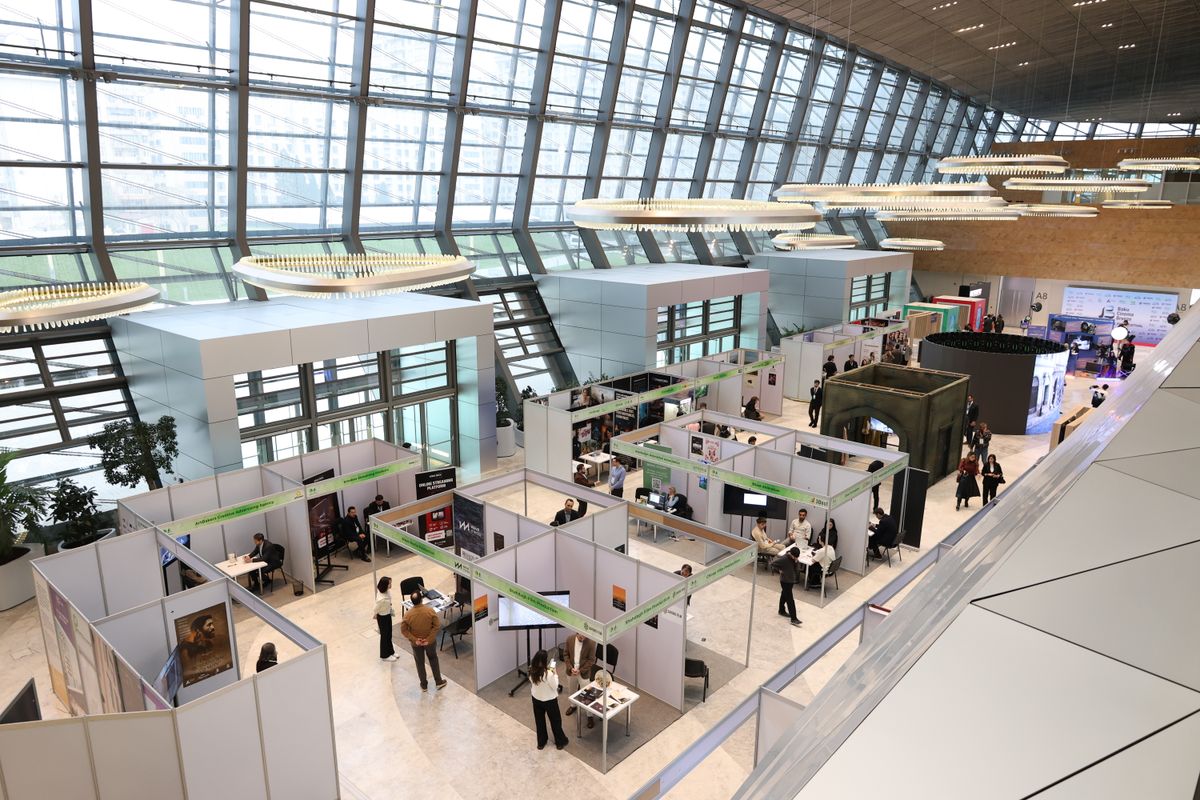
Inside the Canton Fair exhibition halls — rows of booths and buyers from more than 200 countries moving through the aisles.
2. It is China's wholesale capital — 1,200 markets in one city.
Whole districts here live off a single category. The Zhongda textile district alone packs 61 markets and 23,000-plus shops into a few blocks, moving over $28B a year — a third of China's fabric and accessory trade. Baiyun specializes in leather, Yide Road in toys, Baima and Shahe in garments. Whatever you source, some market street here sells it — sample in the morning, order by lunch.
Guangzhou's wholesale-market streets — entire districts built around a single category, where you sample in the morning and order by lunch.
3. It builds and researches at scale — from cars to cancer drugs.
Guangzhou's third strength is making and inventing. GAC Group, headquartered here, built 1.72 million vehicles in 2025, and its electric brand Aion is among China's best-known EV names. Bio Island and Huangpu host 3,000-plus biomedicine firms with output past $28B. Underpinning it: Sun Yat-sen University and South China University of Technology, two of the city's 80-plus universities. Whether you source vehicles, contract biopharma R&D, or recruit engineering graduates, the partners all sit in one metro area.
GAC's automated production line — robotic arms welding car bodies; one of the manufacturing bases behind 1.72 million vehicles a year.
GAC Group (HQ: Guangzhou)
Aion (EV brand)
4. It sits at the center of a factory ring.
Many of the factories behind the fair's booths sit not in Guangzhou but in the ring of factory towns around it. Foshan, next door, turns out furniture and home appliances; Dongguan, an hour south, builds electronics and shoes for export brands; Zhongshan owns the lighting trade; Huizhou supplies batteries and consumer electronics. Each town leans on one category, and its output funnels through Guangzhou's fair, wholesale markets, and port — the practical case for basing a sourcing trip here: walk a fair booth in the morning, stand in the factory that fills it a day later.
Guangzhou sits at the center of a factory ring — behind the glass towers of Zhujiang New Town lie Foshan's furniture and appliances, Dongguan's electronics and footwear, Zhongshan's lighting and Huizhou's batteries.
Guangzhou After Hours: Dim Sum, the River, and Old Canton
A client evening in Guangzhou should start with food and the river — and that is exactly where the night goes.
Cantonese Cuisine
Guangzhou slows down for food. The city gave the world dim sum — small steamed and fried dishes shared over morning tea — and a business breakfast here is often a cart of dumplings and a pot of tea.
Cantonese cuisine — roast goose, barbecued meats, clay-pot dishes and dim sum laid out on one table; here a deal is often sealed over a morning tea of "one pot, two treats."
The Pearl River at Night
By the water, the Canton Tower glows above the river, and evening cruises slide past the illuminated skyline. The Liede Bridge and the lit waterfront make the easy after-dinner stop.
The Pearl River after dark — the Liede Bridge and the lit skyline reflected on the water, with night-cruise boats sliding under the bridge.
Beyond the food and the river, the old quarters — the Chen Clan Ancestral Hall and leafy Shamian Island — are easy half-day add-ons. They are listed in the visit planner just below.
What You Can Actually See and Visit
Being honest about access is part of our service: what's listed as "arranged" needs a business introduction — which is exactly what we do. Company factories, trade-fair floors, and port operations are not tourist attractions anywhere in the world, and we won't pretend otherwise.
Canton Fair Complex, Pazhou
Arranged visit
The Canton Fair fills these halls with tens of thousands of Chinese factories and buyers from over 200 countries — electronics, home goods, textiles and machinery all under one roof. Access is coordinated through business introductions during fair sessions.
Zhongda Textile District
Guided Sourcing
61 textile markets and 23,000-plus shops packed into a few blocks. An interpreter walks you booth by booth to compare and meet the suppliers behind the stalls.
GAC Aion Plant, Panyu
Arranged visit
GAC's smart EV plant, where the Aion takes shape on automated lines — one of the manufacturing bases behind 1.72 million vehicles a year. Access is coordinated through business introductions.
Canton Tower
Open to public
A 600 m tower above the Pearl River; its observation decks and "bubble pods" look out over the widest night view in the city.
Chen Clan Ancestral Hall
Open to public
A Qing-dynasty compound built in 1894, famed for its fine Lingnan woodcarving, pottery sculpture and ironwork.
Shamian Island
Open to public
Around 150 European-style buildings on a former foreign enclave, now tree-lined streets of cafés and galleries.
Factory-Ring Visits: Foshan, Dongguan, Zhongshan, Huizhou
Arranged visit
A one-day factory loop built around your fair dates — Foshan furniture and appliances, Dongguan electronics and footwear, Zhongshan lighting, Huizhou batteries, strung into one supply chain.
Want to experience Guangzhou's trade fair, port, and factories?
We design custom business trips to Guangzhou — factory visits, port logistics tours, and the Canton Fair after hours. We handle the company introductions, arranged visits, interpreters, and logistics. You focus on the insights.
Explore China Contact Us
Learn More
