Twice a year, Guangzhou turns into the world's largest showroom.
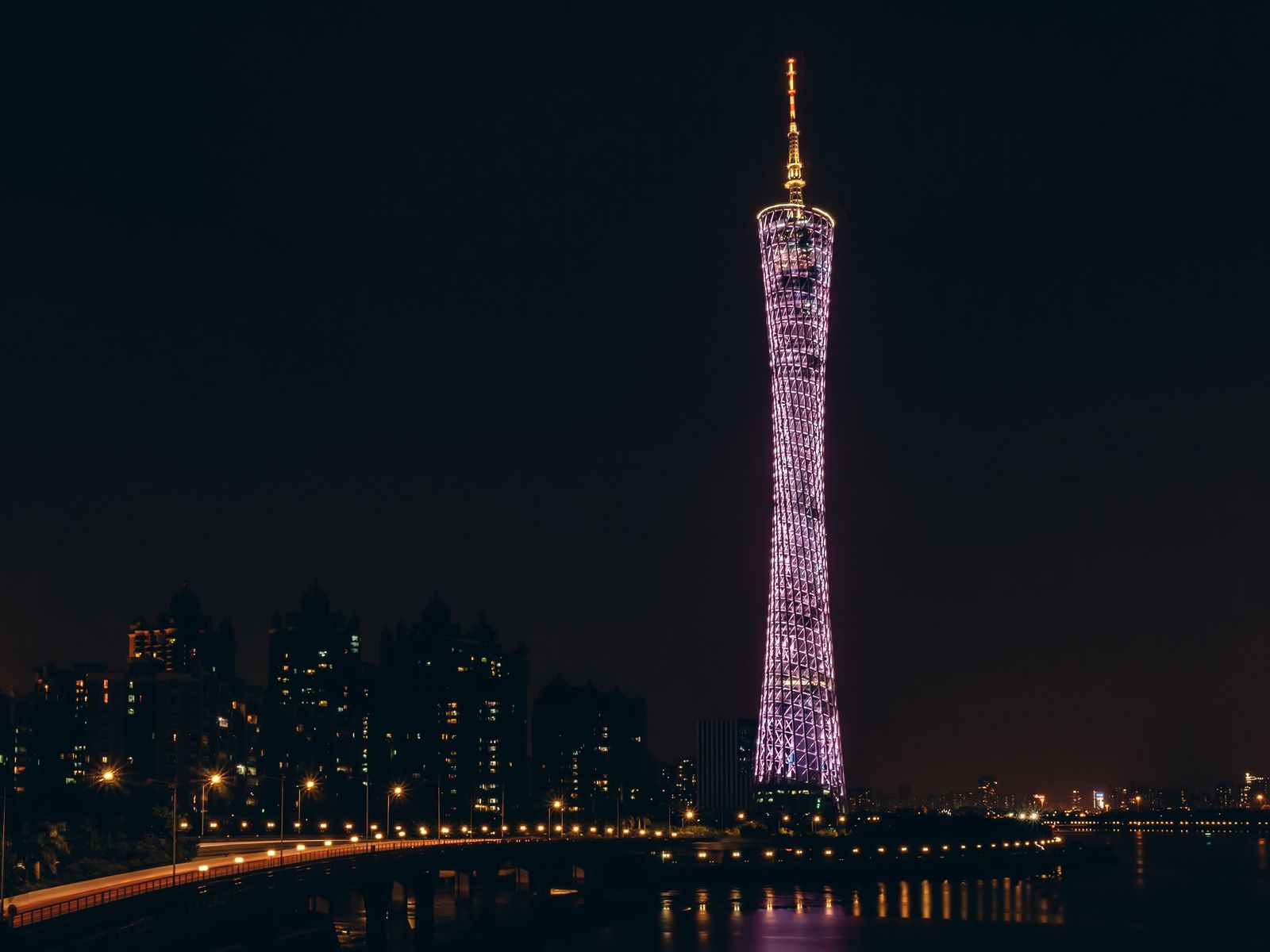
For more than a thousand years, Guangzhou has been the city where China meets the world. Foreign traders once called it Canton — front door of the old Maritime Silk Road. Today the Canton Tower glows above the Pearl River.
But Guangzhou's real engine is trade. Twice a year it hosts the Canton Fair; behind it sit one of the world's busiest container ports, a dense manufacturing base, and the factory ring that supplies the fair itself.
The world's traders have come here for a thousand years — and still do.
Guangzhou hosts the world's largest trade fair, runs one of China's busiest ports, and sits at the center of a factory ring that supplies the world.
At a Glance
$451B
2025 GDP, +4.0%
28.05M
Guangzhou Port 2025 containers (TEU) — world's top 6
1957
Canton Fair founded — world's largest trade fair, held twice a year
80+
universities, two of them 985s (Sun Yat-sen, SCUT)
Translation: Guangzhou is not just a trading post from history — it is a living hub where the world still comes to buy, and where the factories behind the booths sit a short drive away.
Four Things Guangzhou Does Better Than Almost Anywhere
1. It hosts the Canton Fair — the world's largest trade fair.
Guangzhou's signature is the Canton Fair — the China Import and Export Fair, held here and nowhere else every spring and autumn since 1957. The spring session runs mid-April into early May; the autumn session, mid-October into early November. Each session splits into three phases: electronics and machinery, then furniture and home goods, then garments and food. The 138th session in autumn 2025 filled the Pazhou complex with 74,600 booths and more than 32,000 exhibitors, drawing over 240,000 overseas buyers from 218 countries. If you buy from China, these are the most efficient weeks of the year to meet suppliers face to face.
Inside the Canton Fair exhibition halls — rows of booths and buyers from more than 200 countries moving through the aisles.
2. It is China's wholesale capital — 1,200 markets in one city.
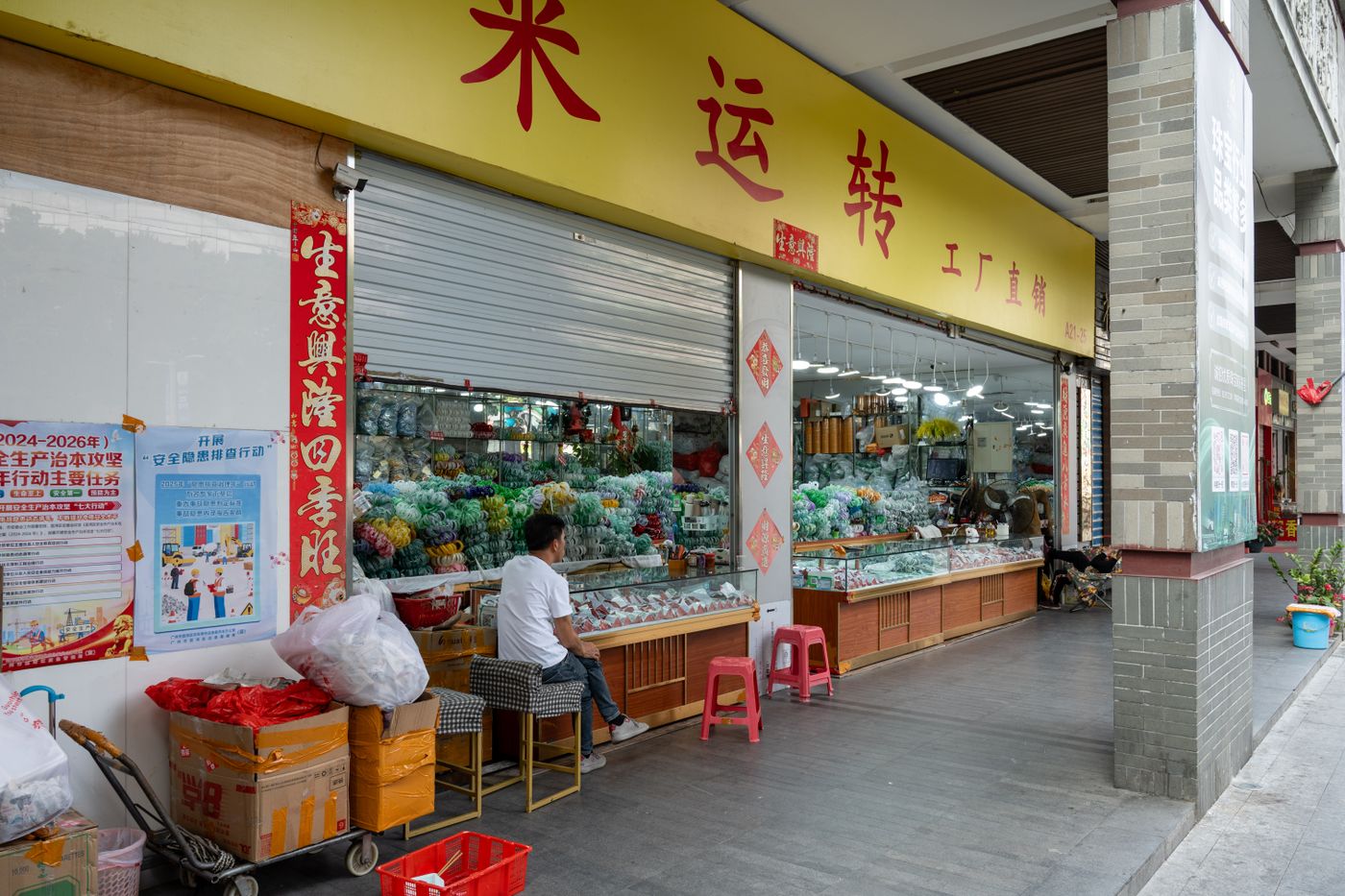
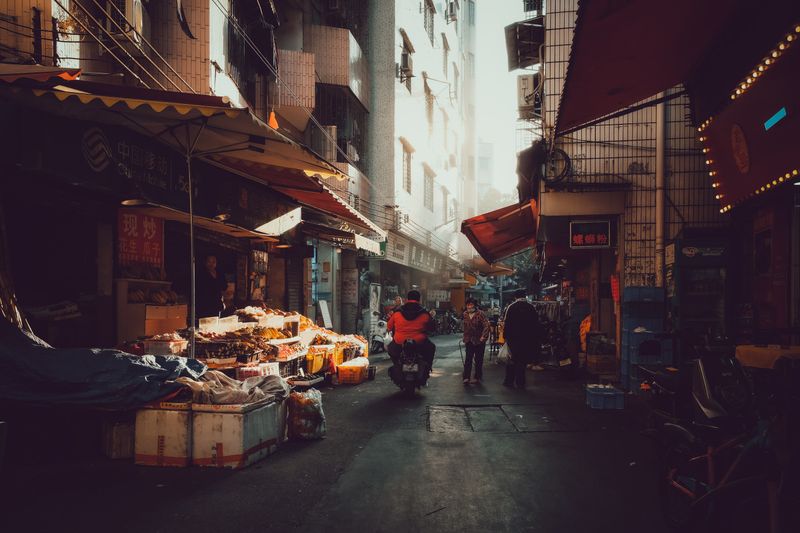
Whole districts here live off a single category. The Zhongda textile district alone packs 61 markets and 23,000-plus shops into a few blocks, moving over $28B a year — a third of China's fabric and accessory trade. Baiyun specializes in leather, Yide Road in toys, Baima and Shahe in garments. Whatever you source, some market street here sells it — sample in the morning, order by lunch.
Guangzhou's wholesale-market streets — entire districts built around a single category, where you sample in the morning and order by lunch.
3. It builds and researches at scale — from cars to cancer drugs.
Guangzhou's third strength is making and inventing. GAC Group, headquartered here, built 1.72 million vehicles in 2025, and its electric brand Aion is among China's best-known EV names. Bio Island and Huangpu host 3,000-plus biomedicine firms with output past $28B. Underpinning it: Sun Yat-sen University and South China University of Technology, two of the city's 80-plus universities. Whether you source vehicles, contract biopharma R&D, or recruit engineering graduates, the partners all sit in one metro area.
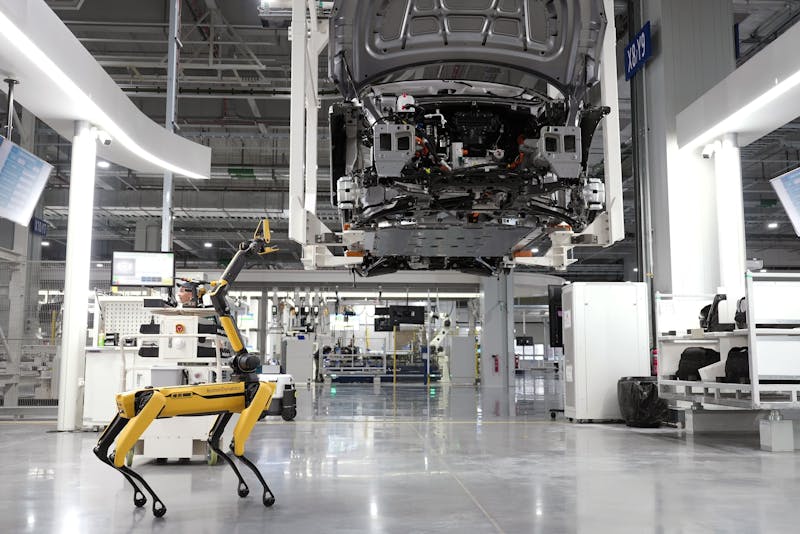
GAC's automated production line — robotic arms welding car bodies; one of the manufacturing bases behind 1.72 million vehicles a year.
GAC Group (HQ: Guangzhou)
Aion (EV brand)
4. It sits at the center of a factory ring.
Many of the factories behind the fair's booths sit not in Guangzhou but in the ring of factory towns around it. Foshan, next door, turns out furniture and home appliances; Dongguan, an hour south, builds electronics and shoes for export brands; Zhongshan owns the lighting trade; Huizhou supplies batteries and consumer electronics. Each town leans on one category, and its output funnels through Guangzhou's fair, wholesale markets, and port — the practical case for basing a sourcing trip here: walk a fair booth in the morning, stand in the factory that fills it a day later.
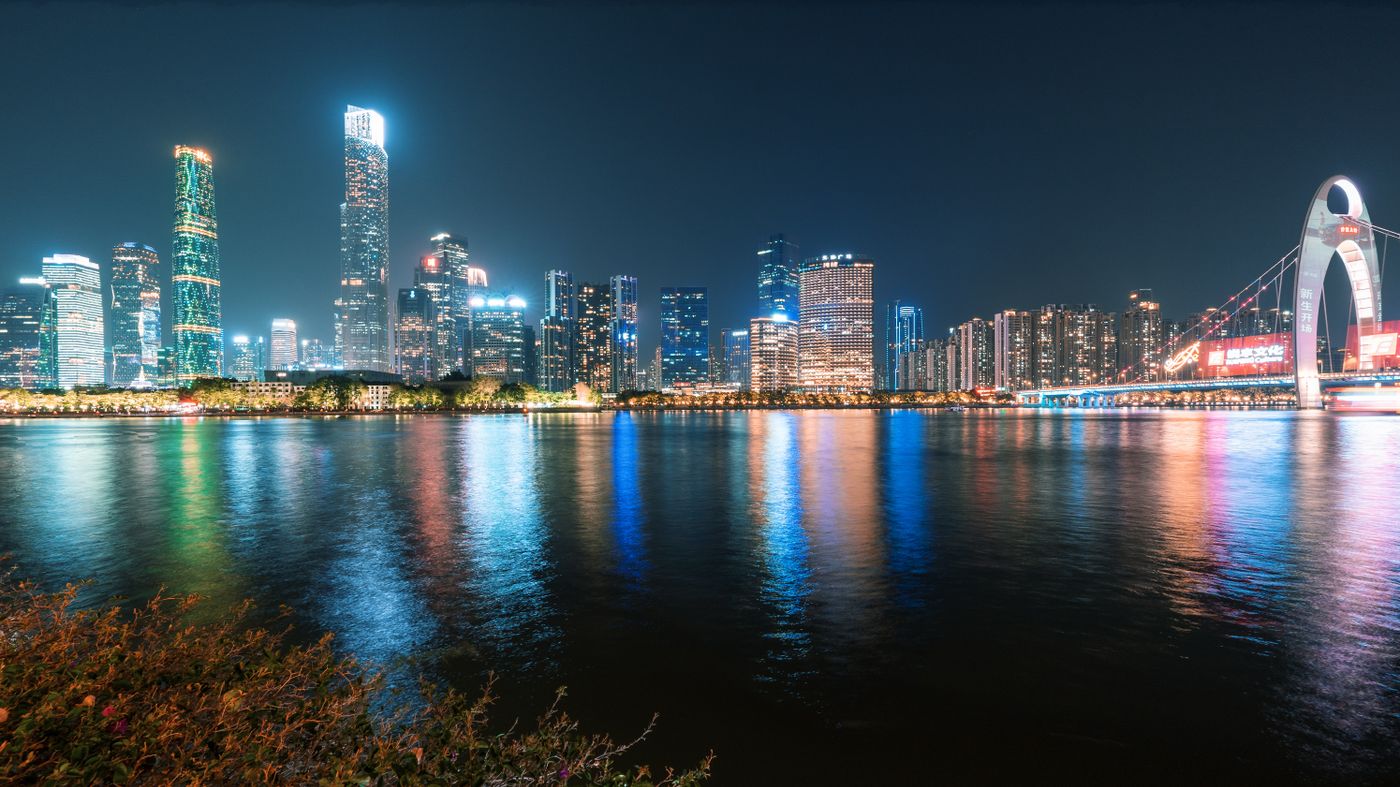
Guangzhou sits at the center of a factory ring — behind the glass towers of Zhujiang New Town lie Foshan's furniture and appliances, Dongguan's electronics and footwear, Zhongshan's lighting and Huizhou's batteries.
Guangzhou After Hours: Dim Sum, the River, and Old Canton
A client evening in Guangzhou should start with food and the river — and that is exactly where the night goes.
Cantonese Cuisine
Guangzhou slows down for food. The city gave the world dim sum — small steamed and fried dishes shared over morning tea — and a business breakfast here is often a cart of dumplings and a pot of tea.
Cantonese cuisine — roast goose, barbecued meats, clay-pot dishes and dim sum laid out on one table; here a deal is often sealed over a morning tea of "one pot, two treats."
The Pearl River at Night
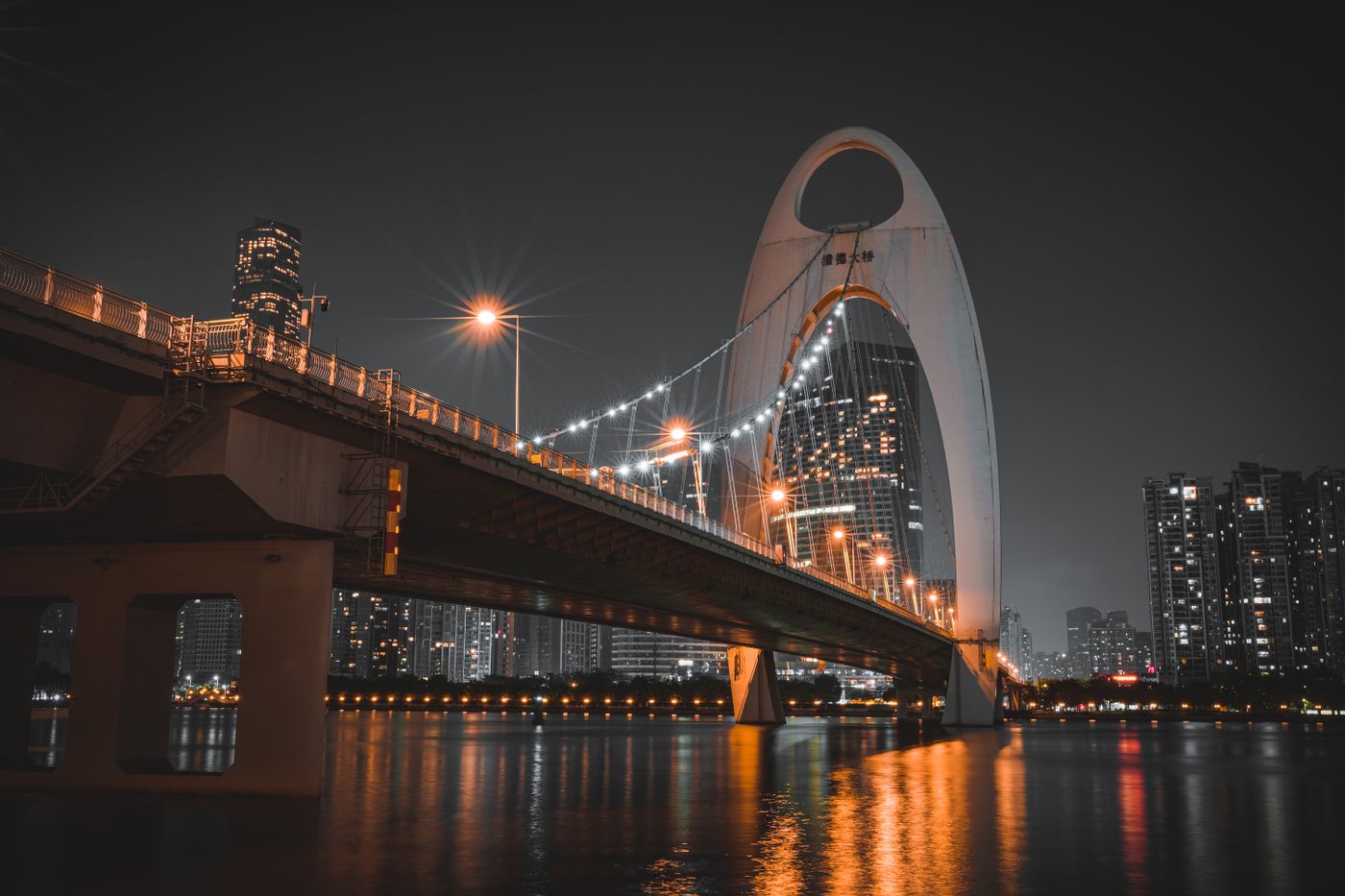
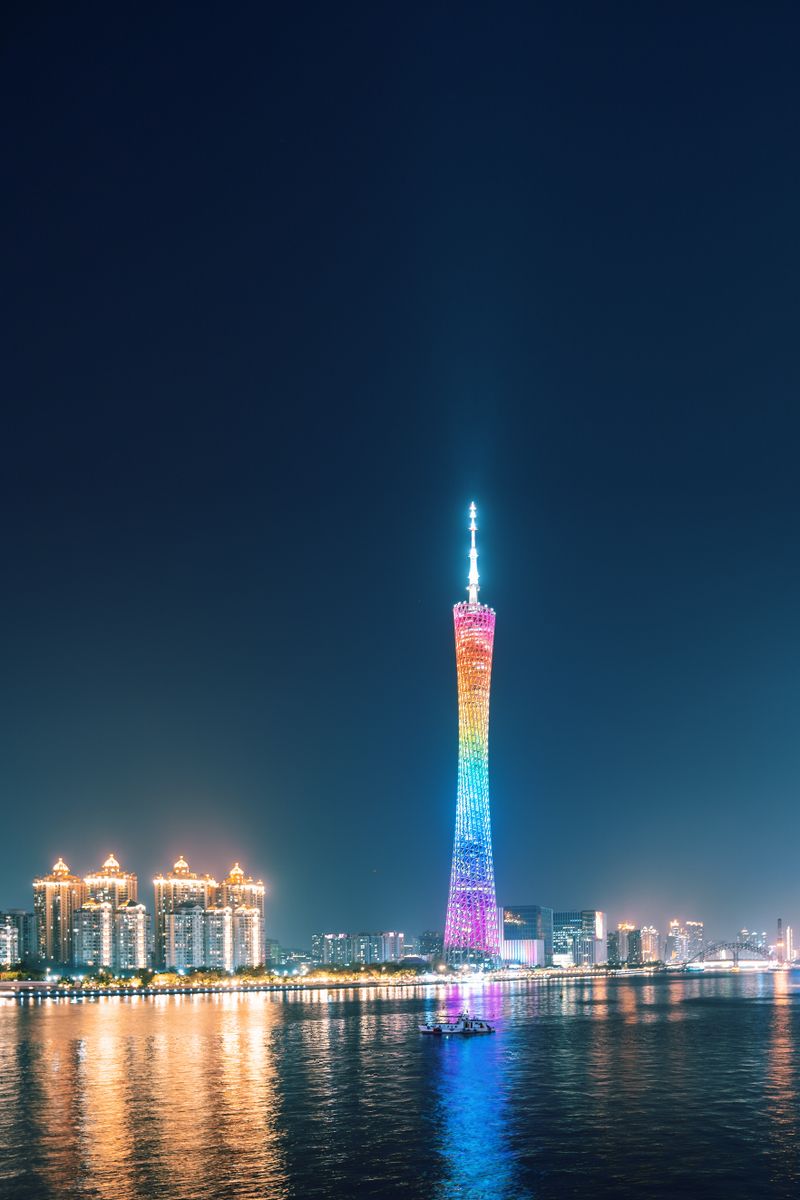
By the water, the Canton Tower glows above the river, and evening cruises slide past the illuminated skyline. The Liede Bridge and the lit waterfront make the easy after-dinner stop.
The Pearl River after dark — the Liede Bridge and the lit skyline reflected on the water, with night-cruise boats sliding under the bridge.
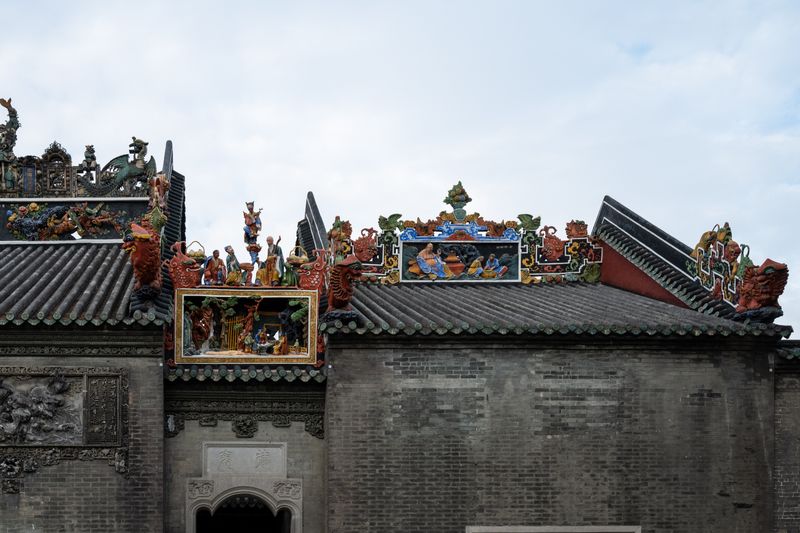
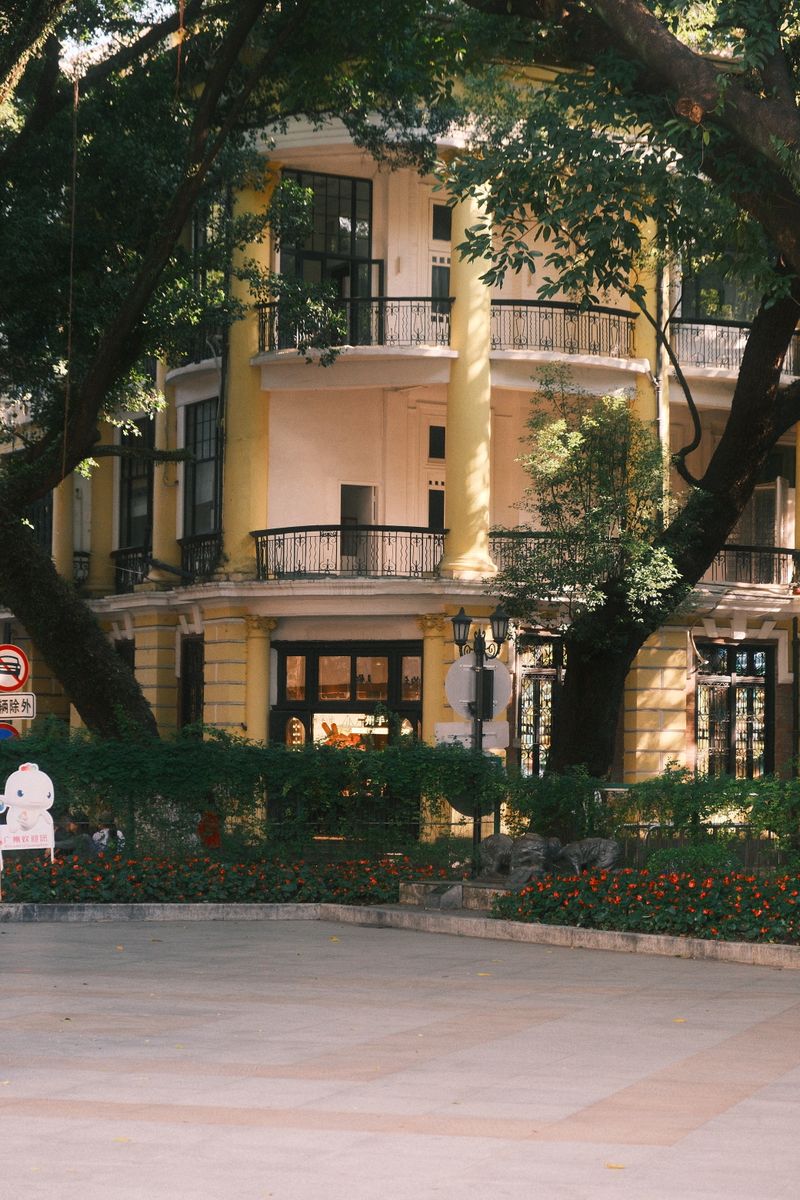
Beyond the food and the river, the old quarters — the Chen Clan Ancestral Hall and leafy Shamian Island — are easy half-day add-ons. They are listed in the visit planner just below.
What You Can Actually See and Visit
Being honest about access is part of our service: what's listed as "arranged" needs a business introduction — which is exactly what we do. Company factories, trade-fair floors, and port operations are not tourist attractions anywhere in the world, and we won't pretend otherwise.
Canton Fair Complex, Pazhou
Arranged visit
The Canton Fair fills these halls with tens of thousands of Chinese factories and buyers from over 200 countries — electronics, home goods, textiles and machinery all under one roof. Access is coordinated through business introductions during fair sessions.
Zhongda Textile District
Guided Sourcing
61 textile markets and 23,000-plus shops packed into a few blocks. An interpreter walks you booth by booth to compare and meet the suppliers behind the stalls.
GAC Aion Plant, Panyu
Arranged visit
GAC's smart EV plant, where the Aion takes shape on automated lines — one of the manufacturing bases behind 1.72 million vehicles a year. Access is coordinated through business introductions.
Canton Tower
Open to public
A 600 m tower above the Pearl River; its observation decks and "bubble pods" look out over the widest night view in the city.
Chen Clan Ancestral Hall
Open to public
A Qing-dynasty compound built in 1894, famed for its fine Lingnan woodcarving, pottery sculpture and ironwork.
Shamian Island
Open to public
Around 150 European-style buildings on a former foreign enclave, now tree-lined streets of cafés and galleries.
A one-day factory loop built around your fair dates — Foshan furniture and appliances, Dongguan electronics and footwear, Zhongshan lighting, Huizhou batteries, strung into one supply chain.
Want to experience Guangzhou's trade fair, port, and factories?
We design custom business trips to Guangzhou — factory visits, port logistics tours, and the Canton Fair after hours. We handle the company introductions, arranged visits, interpreters, and logistics. You focus on the insights.
Xiamen: China’s Investment Front Door and the Gateway to Taiwan
The island SEZ where China opens its door to investors — and faces Taiwan across the strait.
Business Tours > Trade & Investment > Xiamen Best for: Investment Fairs, Cross-Strait Trade, Optoelectronics
Gulangyu’s car-free lanes sit across the strait from Xiamen’s modern skyline — old port and new economy in one frame.
An island city that trades, invests, and looks across the water. At its heart sits Gulangyu — a car-free UNESCO island of piano music and colonial-era villas where the only traffic is footsteps. Foreign traders once called the whole bay “Amoy,” a port on the old Maritime Silk Road that in 1980 became one of China’s first four special economic zones.
But Xiamen’s real business is connection. Every September it hosts CIFIT, the only national-level fair in China built purely around investment, and it sits closer to Taiwan than any other major mainland city — a working bridge to the island’s manufacturers and a front door for foreign capital into China.
Gulangyu’s lanes are signed for walkers, not drivers — here, the only traffic is footsteps.
Xiamen is where China opens its door to investors, and the mainland city that looks Taiwan most directly in the eye.
Xiamen at a Glance
$126B 2025 GDP, up 5.7% — an island SEZ punching far above its size
1,154 CIFIT 2025 deals signed — ¥644B ($90B) planned investment
12.51M Xiamen Port 2025 containers (TEU) — a world top-15 port
Global #1 Xiamen’s Mini/Micro LED chip capacity — the world’s screens
Three Things Xiamen Does Better Than Almost Anywhere
1. It hosts CIFIT — China’s only investment fair.
Every September, Xiamen becomes the stage for CIFIT — the only national-level trade fair in China built purely around investment. The 25th session in 2025 filled 120,000 square meters with 80,000-plus visitors from 123 countries, and 1,100-plus government and business delegations signed 1,154 projects worth some ¥644 billion ($90 billion). The main venue, the Xiamen International Conference & Exhibition Center, turns the city into a one-week marketplace for “Invest in China.” If you are scouting Chinese partners or bringing capital into the country, this is the most concentrated week of the year to meet officials and factory owners face to face.
CIFIT — China International Fair for Investment & Trade
The CIFIT exhibition halls — national pavilions and investment booths under one roof.
2. It is the mainland’s closest bridge to Taiwan.
Xiamen is the major mainland city nearest Taiwan — a working bridge, not just a neighbor. The Xiamen–Kinmen “mini-three-links” ferry has run for 25 years; the sea crossing takes under 30 minutes and links Xiamen to about 100 mainland cities and Kinmen to six Taiwan points, at roughly half the cost of a direct flight. In 2025 the route carried more than 1.7 million passengers (up 38.8%), and Xiamen added 11% more new Taiwan-invested firms. Taiwan-invested companies make nearly half the city’s optoelectronics output, so the cross-strait supply chain is something you can actually walk into here. A world top-15 container port underpins it all as the logistics backbone.
Xiamen’s port and ferry terminal — the logistics backbone of the cross-strait bridge.
3. It builds the world’s screens and lights.
Xiamen builds light — and quietly leads the world at it. Its optoelectronics cluster has topped ¥100 billion in output for 13 straight years; Sanan Optoelectronics, headquartered here, holds the world’s largest capacity in Mini/Micro LED chips, and Tianma runs the world’s biggest LTPS display factory in the city — together the cluster is worth more than ¥200 billion a year. Whether you source displays or LEDs, the specialist suppliers sit in one metro area.
Sanan Optoelectronics
Tianma
Screens and light — the display and LED industry Xiamen quietly leads the world in.
Xiamen After Hours: Islands, Forts, and Gongfu Tea
Gulangyu Island is Xiamen’s postcard — a car-free UNESCO isle reached by a short ferry, where piano museums and crumbling colonial villas sit among banyan trees, and the only sound at dusk is music drifting from open windows. The city’s soul is Minnan — the culture of southern Fujian — and the English word for tea itself traces to the local pronunciation. Let a teahouse host walk you through a Gongfu ceremony: tiny cups, short steeps, oolongs grown in the hills nearby.
Gulangyu’s seafront — colonial rooftops wrapped in tropical greenery.
Back on the mainland, the Hulishan Cannon Fort guards the coast with a 19th-century Krupp cannon — one of the largest of its kind ever cast — while Nanputuo Temple, a working Buddhist monastery by the sea, draws locals lighting incense beside the old university quarter. Between the fort, the temple, and the teahouses, Xiamen’s after-hours life is as layered as its trade.
Red-roofed coastal houses — the seaside fabric of old Xiamen.
What You Can Actually See and Visit
CIFIT: Xiamen Int’l Conf. & Exhibition Center Arranged visit
One of China’s largest exhibition centers, where the annual CIFIT fair fills the halls with investment pavilions from 100-plus countries.
Cross-Strait Business: Taiwan-Invested Parks Arranged visit
The industrial zones where Taiwan-invested firms make everything from LEDs to components — a working look at the cross-strait supply chain.
Xiamen Optoelectronics: LED & Display Arranged visit
Showrooms and plants behind Sanan and Tianma, where Mini/Micro LED chips and LTPS displays are built — the screens inside products you already sell.
Gulangyu Island Open to public
A car-free UNESCO island a short ferry ride from the city, of piano museums, seaside promenades, and colonial-era villas.
Gongfu Tea House Experience Open to public
A slow hour in a wood-panelled teahouse, where a host pours oolongs Gongfu-style — tiny cups, short steeps, and a spread of seasonal snacks.
Nanputuo Temple Open to public
A hillside Buddhist monastery by the water, with carved halls and incense ceremonies in the Minnan temple style — a short walk from the old university quarter.
More of Xiamen
Being honest about access is part of our service: what’s listed as “arranged” needs a business introduction — which is exactly what we do. CIFIT runs once a year and needs registration; port terminals, factory floors, and R&D campuses are employees-only. We never sell access that doesn’t exist.
Want to see Xiamen’s CIFIT, cross-strait trade, and factories?
We design custom business trips to Xiamen and the Southeast Coast — tailored to your industry, your objectives, and your schedule. We handle the company introductions, interpreter arrangements, factory visits, and logistics. You focus on the insights.
Explore China Contact Us
China's 8D mountain city — and the auto & electronics engine behind the skyline.
Best for: Automotive & NEV, Electronics supply chain, Inland logistics
A city built into a mountain, where the river, the rail, and the skyline all refuse to stay on one level.
You have probably seen Chongqing before you knew its name.
The viral night-riding motorcycle videos weaving through stacked overpasses. The metro train that drives straight through a residential tower at Liziba. A skyline so vertical that GPS can't tell which floor you're on, and streets that seem to fold back on themselves five levels up. This is the city the internet calls the "8D city" — a mountain built into a metropolis, where the river, the rail, and the roads refuse to stay on one level.
For most foreigners, Chongqing is a bucket-list stop: the lights of Hongyadong, the cable car across the Yangtze, hotpot that numbs your tongue. But beyond these tourist shots, it is also one of China's most important manufacturing cities.
Chongqing is China's #1 car-making city, builds roughly one in four of the world's laptops, and — despite having no coastline — runs one of China's busiest inland trade gateways. If your business touches electric vehicles, electronics supply chains, or getting goods out of western China, this mountain city is worth a dedicated trip, not a detour.
Chongqing builds China's cars, assembles its laptops, and — without a coastline — runs their trade with the world.
At a Glance
¥3.38T
GDP (2025, +5.3%) — first city in central-western China past the ¥3T mark
2.79M
Cars built in 2025 (#1 in China); 1.30M were NEVs, up 36%
54.98M
Laptops produced in 2025 — about one-quarter of the global total
127
Countries reached by the New Western Land-Sea Corridor from Chongqing
Translation: Chongqing is not just a tourist curiosity — it is a dual engine of manufacturing and opening-up, home to 31.87 million people and the largest economy in western China.
Three Things Chongqing Does Better Than Almost Anywhere
1. It is China's car-making capital — and it went electric fast.
Chongqing produced 2.79 million vehicles in 2025, the #1 city in China, of which 1.30 million were new-energy vehicles — a 36% jump. China Changan is now the country's third central-state auto group and Chongqing's first tier-one central SOE headquarters. Seres, the partner behind Huawei's AITO line, built its global R&D center and new headquarters in Liangjiang. Throw in 6.47 million motorcycles, and you have a dense, vertically integrated mobility cluster.
The same valley also feeds it with lightweight materials. Southwest Aluminum (HQ: Chongqing) supplies aluminum for the C919 aircraft and for local NEV makers; Chongqing University's magnesium-alloy center is commercializing lighter parts for cars and aircraft. What this means for you: if you want to see how Chinese smart EVs are mass-produced and exported — and the materials that make them lighter — no city packs more of the chain into one metro area.
Where the cars come from: Chongqing's Liangjiang and Yubei auto corridor.
CHANGAN Changan (HQ: Chongqing)
Seres / AITO (HQ: Chongqing)
2. It assembles a quarter of the world's laptops — and now owns the chain.
Chongqing shipped 54.98 million laptop computers in 2025, roughly one in four made anywhere on Earth. The city moved beyond pure contract assembly toward a full electronics chain — panels, power semiconductors, smart terminals — so suppliers and contract manufacturers sit within an hour's drive. What this means for you: instead of chasing one factory, you can walk a whole sub-tier supply chain in a single visit.
BOE (Chongqing panel fabs)
HP (Chongqing base)
3. Landlocked, it still runs China's trade with the world.
Chongqing has no coastline, so it built three outbound routes instead.
China–Europe Railway Express is the headline. Trains leave Chongqing for Germany, Poland, and Russia, carrying cars, electronics, and machinery. The journey is faster than sea and cheaper than air — a practical option for high-value goods leaving western China.
What inland export looks like: a Chongqing–Europe freight train.
New Western Land-Sea Corridor heads south to ASEAN and beyond, reaching 127 countries and 584 ports. Container traffic and trade value both rose around 30% in 2025.
The Yangtze River waterway runs east to Shanghai, linking Chongqing directly to the Pacific.
Guoyuan Port ties all three together in one yard: containers switch from train to ship to truck. For anyone asking "how does inland China export," this is the living answer.
Where three trade corridors meet: Guoyuan Port in Chongqing.
The 8D City You'll Want to See on the Side
A few stops are enough to show clients why Chongqing trends on social media:
Hongyadong
Stacked stilt-house towers lit up above the river. Go after dark for the full effect — this is the view that made the city famous online.
Hongyadong after dark — the view that made Chongqing famous online.
Liziba & Yangtze Cable Car
A metro train that runs through a residential tower, and a cable car that crosses the river 100 meters up. Both are normal city transport.
The metro-through-a-building moment at Liziba.
Ciqikou
An old riverside town of narrow lanes, teahouses, and hotpot shops. Good for an informal client dinner.
Wulong Karst
Natural stone bridges and gorges two hours by high-speed rail. A full-day escape from the city.
Wulong Karst — a day trip into the landscape behind the city.
Best of all, these sights sit on the same metro and rail network as the factory parks. A morning of meetings can end with an evening walk along the river.
What You Can Actually See and Visit
Being honest about access is part of our service: what's listed as "arranged" needs a business introduction — which is exactly what we do. Company factories, R&D floors, and port operations are not tourist attractions anywhere in the world, and we won't pretend otherwise.
Seres / AITO Super Factory
Arranged visit
The Liangjiang plant behind Huawei's AITO line — a window into how China's smart EVs are built at volume. Access is coordinated through business introductions, not walk-in tours.
Chongqing Auto Corridor
Arranged visit
We arrange tailored visits across the city's NEV supply chain — from a Changan base to tier-one component makers — matched to your sector and introduction level.
Guoyuan Port & Inland-Open Hub
Arranged visit
Where rail, river, and the Land-Sea Corridor meet. We arrange a guided look at the multimodal operation and the logistics ecosystem — access via business introduction.
Hongyadong & Jiefangbei
Open to public
Stacked stilt-house towers glowing above the Jialing River. Go after dark for the full effect — the easiest evening stop after factory meetings.
Liziba & Yangtze Cable Car
Open to public
A metro train that runs through a residential tower, plus a cable car across the river 100 meters up. Both are part of normal city transport.
Wulong Karst (UNESCO)
Open to public
Towering natural stone bridges and gorges, two hours by high-speed rail. A full-day client outing away from the city.
Want to experience Chongqing's factories and trade routes in person?
We design custom business trips to Chongqing — factory visits, port logistics tours, and the 8D city after hours. We handle the company introductions, arranged visits, interpreters, and logistics. You focus on the insights.
Explore China Contact Us
Sign up for the latest China travel news, practical tips, and fresh inspiration.
Hear about Eddie’s in-person meetups around the world, and come say hello.