

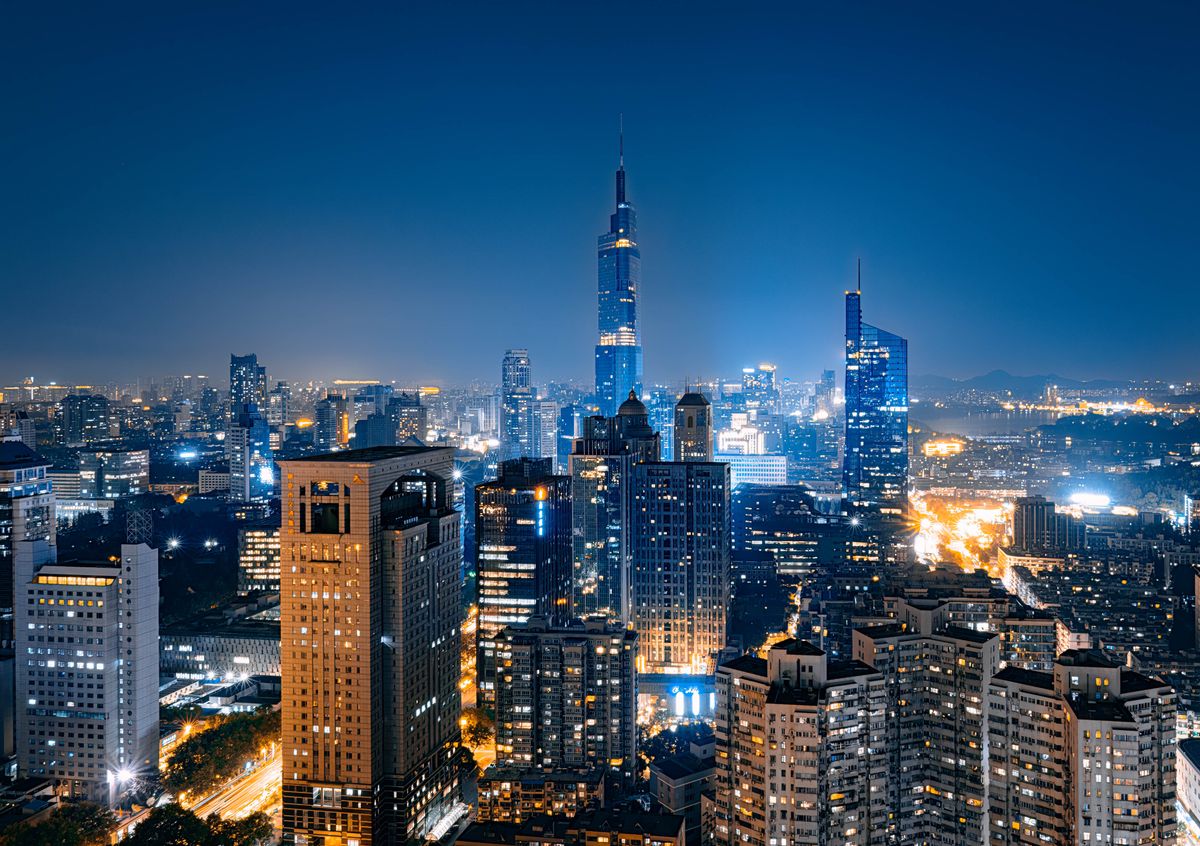
 Huawei Nanjing
 ZTE Nanjing
 TSMC Nanjing
 Nanjing University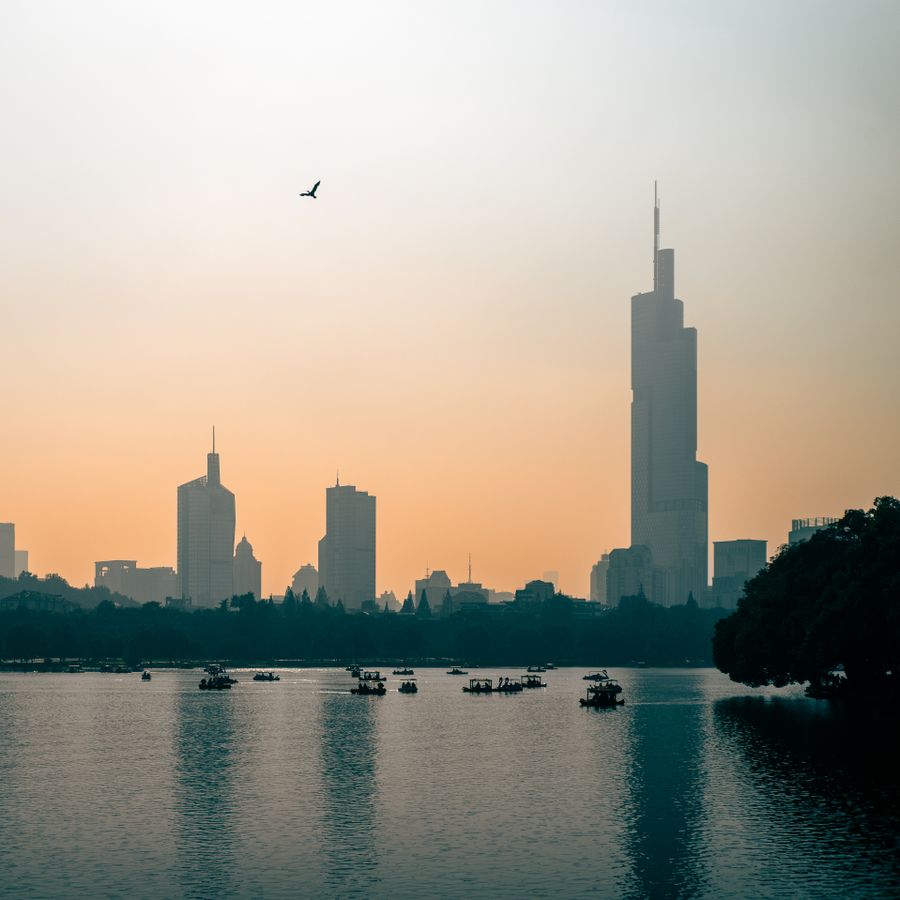

- Article published at:
- Article author: Crystal Cheng
- Article comments count: 0
Qingdao: China's Northern Sea Gate and a City of Global Brands
Home of Haier, Hisense, and Tsingtao — and one of the world's top-5 container ports.
Business Tours > Port & Brands > Qingdao
Best for: Port Logistics, Consumer Brands, Marine Science
By day Qingdao loads the ships; by night the red rooftops glow above the Yellow Sea.
Look at a Tsingtao beer label and you have already seen Qingdao — a red pavilion at a pier, red rooftops, the Yellow Sea beyond. The city wears its German-built past openly: broad boulevards, European facades, and a 1903 brewery that still pours the same beer.
But Qingdao is more than a seaside postcard. It is the home of top Chinese brands that sell worldwide — Haier, Hisense, Tsingtao — and China's northern sea gate, a top-5 global container port. Add China Ocean University, the country's top marine-science school, and ocean research turns into seafood, medicines, and ship parts. For a business traveler, the question is which of these brands, ports, or labs can supply you.
Qingdao is where the sea meets industry — a top-5 port, global appliance brands, and China's leading marine-science hub.
Qingdao at a Glance
$248B
2025 GDP, +5.4%
32.89M
Qingdao Port 2025 containers (TEU) — world's #5
$82B+
Marine economy — ~1/3 of GDP, #3 among China's coastal cities
25
Universities incl. China Ocean University (top marine science)
Translation: a sea gate to North China and the hometown of top Chinese brands sold worldwide — where the port, labs, and factories all face the water.
What Qingdao Does Best
1. It is home to top Chinese brands that sell worldwide.
Qingdao's first strength is the brands it built and still headquarters. Haier was founded here in 1984 and is now the world's No. 1 major-appliance brand by retail volume for 17 consecutive years, with 2025 group revenue above $60 billion and over half of its sales earned overseas. Hisense, founded in 1969, posted $32 billion in 2025 revenue, ships the world's No. 2 volume of televisions, and leads the global 100-inch-plus TV market. And Tsingtao — the brewery opened by German and British merchants in 1903 — is China's second-largest brewery and about half of the country's beer exports.
If you source appliances, buy electronics, or import beer, this is where they are made — Chinese brands whose products fill shelves from Europe to the Gulf.
Automated lines build fridges, washing machines, and televisions for brands that sell worldwide.
2. It is China's northern sea gate — a top-5 global port.
Qingdao's second job is being the sea outlet for North China and the gateway between China and Northeast Asia. Qingdao Port moved 32.89 million TEU of containers in 2025 — the world's fifth-busiest container port — and 740 million tonnes of cargo, ranking fourth globally by volume.
Its nearly 240 shipping routes reach 700-plus ports across 180 countries and regions, and it has led China in rail-sea intermodal transport for 11 straight years. The 2025 Xinhua-Baltic index ranks it 13th globally, ahead of Tokyo and Busan. If you trade with North China, Korea, or Japan, your goods likely flow through here.
Qingdao's bay waterfront, with the working port and its gantry cranes beyond.
3. It turns marine science into products the world buys.
Qingdao's third strength is the sea itself. The city's marine economy topped $82 billion in 2025 — about one-third of its GDP. That rests on a concentration of marine research: 25 universities including China Ocean University, the country's top marine-science school, plus Laoshan Laboratory, China's only national marine lab.
The pipeline feeds real industries: marine biomedicine (the "blue medicine store" program has produced BG136, the first marine-derived anti-tumor drug in clinical trials), aquaculture, and ship manufacturing. If you source seafood, marine nutraceuticals, or ship parts, Qingdao is where the labs and the farms sit side by side.
The Laoshan coast on the Yellow Sea — the same water that feeds Qingdao's labs, farms, and seafood trade.
Qingdao's Other Face: the Bay and the Old Town
The sea shapes the city's character as much as its business. Red-roofed buildings step down to the water, European-style villas fill the old foreign concession's leafy streets, and an 1892 pier stretches into the bay. It is a walkable introduction to a city that has always looked outward.
The old town's red roofs and European villas are the city's most recognizable silhouette.
For food, Qingdao is proudly coastal: clams and mackerel grilled or stir-fried, washed down with a Tsingtao poured a few kilometres from where it is brewed.
What You Can Actually See and Visit
Home-Appliance & Electronics Parks Arranged visit
Where Haier and Hisense run their smart-manufacturing campuses — automated lines building fridges, washing machines, and televisions for global brands.
Qingdao Port Arranged visit
One of the world's top-5 container ports and North China's sea gate. Container terminals, bonded logistics zones, gantry cranes, and rail yards where China-Europe freight is assembled.
Marine Science & Blue Economy Parks Arranged visit
Where Ocean University, Laoshan Lab, and marine-biotech firms turn ocean research into seafood, ingredients, and "blue medicine" products.
Tsingtao Beer Museum Open to public
The 1903 brewery turned museum, with copper vats, a tasting line, and the story of China's best-known beer. Pour a fresh draught straight from the line.
European Villa District Open to public
A leafy enclave of 2,000-plus early-1900s European villas from the old foreign concession, shaded by plane trees — a quiet walk through old international Qingdao.
Qingdao's Historic Sea Pier Open to public
The 1892 pier reaching into the bay, crowned by a red pavilion that appears on every Tsingtao beer label — the city's most-photographed spot at sunrise.
Being honest about access is part of our service: what's listed as "arranged" needs a business introduction — which is exactly what we do. Port terminals, factory floors, and R&D campuses are employees-only. We never sell access that doesn't exist.
Want to see Qingdao's port, factories, and seaside?
We design custom business trips to Qingdao and the Shandong peninsula — tailored to your industry, your objectives, and your schedule. We handle company introductions, interpreter arrangements, factory visits, and logistics. You focus on the insights.
Explore China
Contact Us
Learn More

