Xi'an: The 3,000-Year-Old Capital Powering Memory Chips, Short Dramas, and Eurasia Rail
From the Terracotta Army to NAND flash — a Tang capital that still runs the belt-and-road rail gateway and a memory-chip fab.
Business Tours > Culture, Rail & Hard-Tech > Xi'an Best for: Cultural Tourism, Rail Logistics, Semiconductors
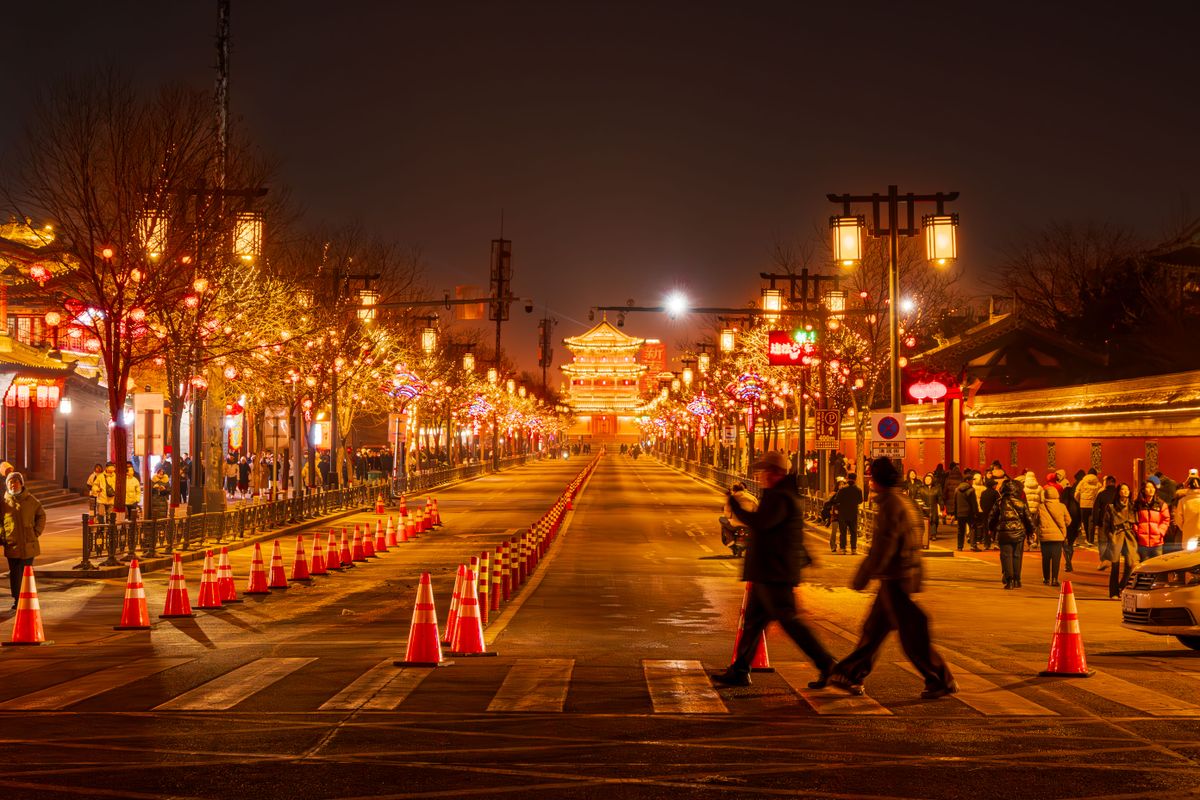
By day Xi'an sells 3,000 years of history; by night it sells Tang Dynasty fantasy.
The Terracotta Army is the postcard the world knows — 8,000 life-sized clay soldiers buried to guard China's first emperor, unearthed outside Xi'an in 1974. But the postcard is only the introduction.
Behind the tombs and Tang costumes, Xi'an is one of China's densest hard-tech and tourism clusters — the place that turns 3,000 years of history into a tourism industry, runs one of the busiest China–Europe rail hubs, and makes a large share of the world's flash memory. For a business traveler, the question is what Xi'an is producing right now.
Xi'an proves you can run a 3,000-year-old tourist city, the Belt and Road's rail gateway, and a memory-chip fab off the same power grid.
Xi'an at a Glance
$196B 2025 GDP, +4.7%
327M Tourist visits in 2025
6,037 China–Europe train trips in 2025, +21.1%
≈40% of the world's NAND flash made at Samsung's Xi'an plant
Translation: an ancient capital that still runs a world-class rail gateway and a memory-chip fab — where the tourists, the containers, and the wafers all move through the same city.
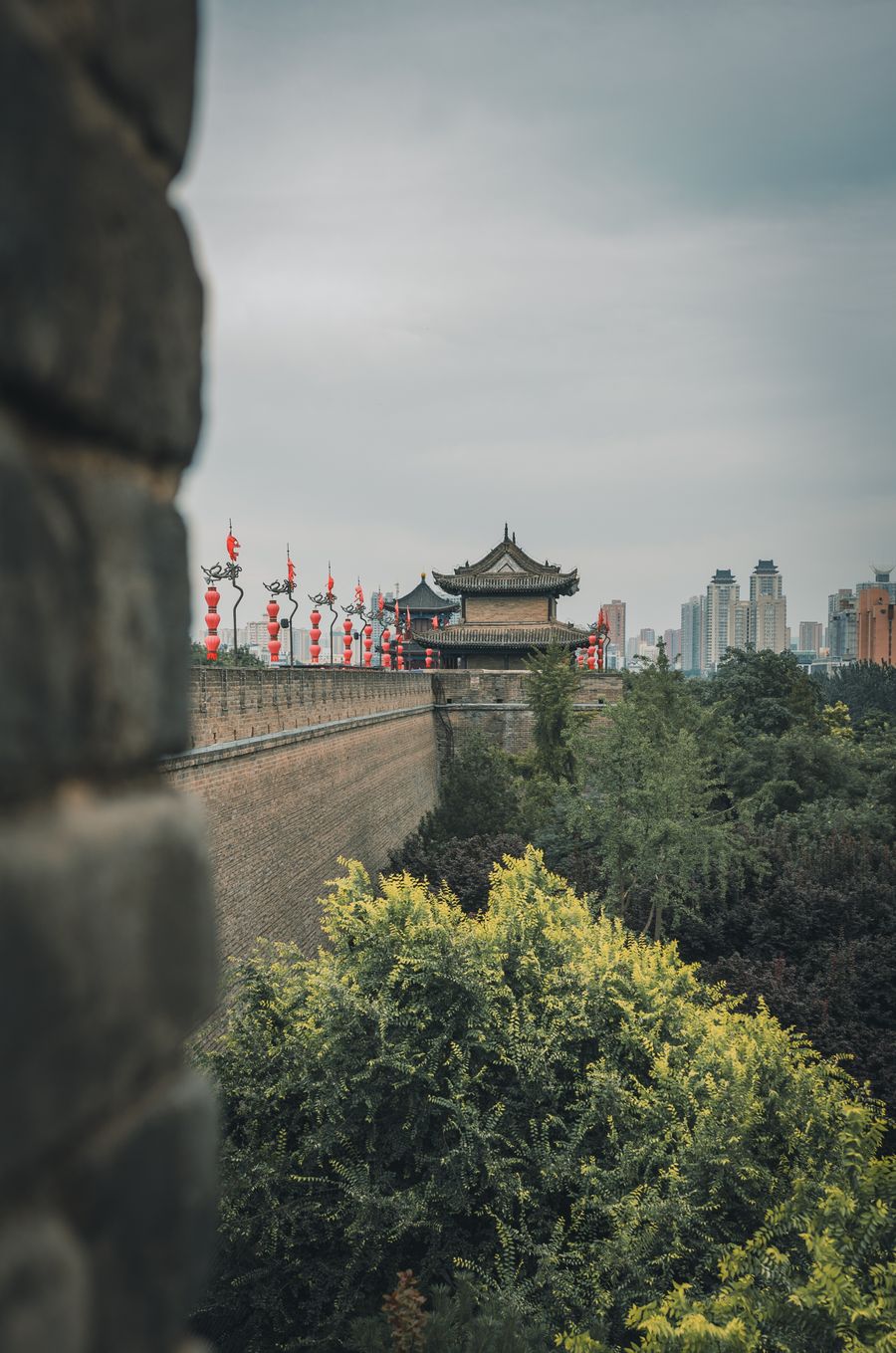
The 600-year-old city wall and the modern skyline beyond it — the two Xi'ans share one grid.
Three Things Xi'an Does Better Than Almost Anywhere
1. Its 3,000 years of history is a working tourism industry.
Xi'an is the city with China's richest history and culture — the ancient Tang capital, with 13 imperial dynasties seated here across more than 1,100 years. That heritage is not a museum piece; it is a real, prosperous industry.
The city drew 327 million tourist visits in 2025, while its above-scale cultural and creative enterprises booked $12.0 billion in revenue, up 2.1%. The Tang aesthetic has become a consumer and content brand: Datang Never Sleeps City turned a Tang street into China's most-copied nightlife format, and the Daming Palace Banquet blends Tang-costume cosplay, dinner, and live court performance. Behind it sit 139 museums. For a business visitor, this is soft power you can use: host clients over Tang spectacle, then carry home shelf-ready museum-brand goods to import.
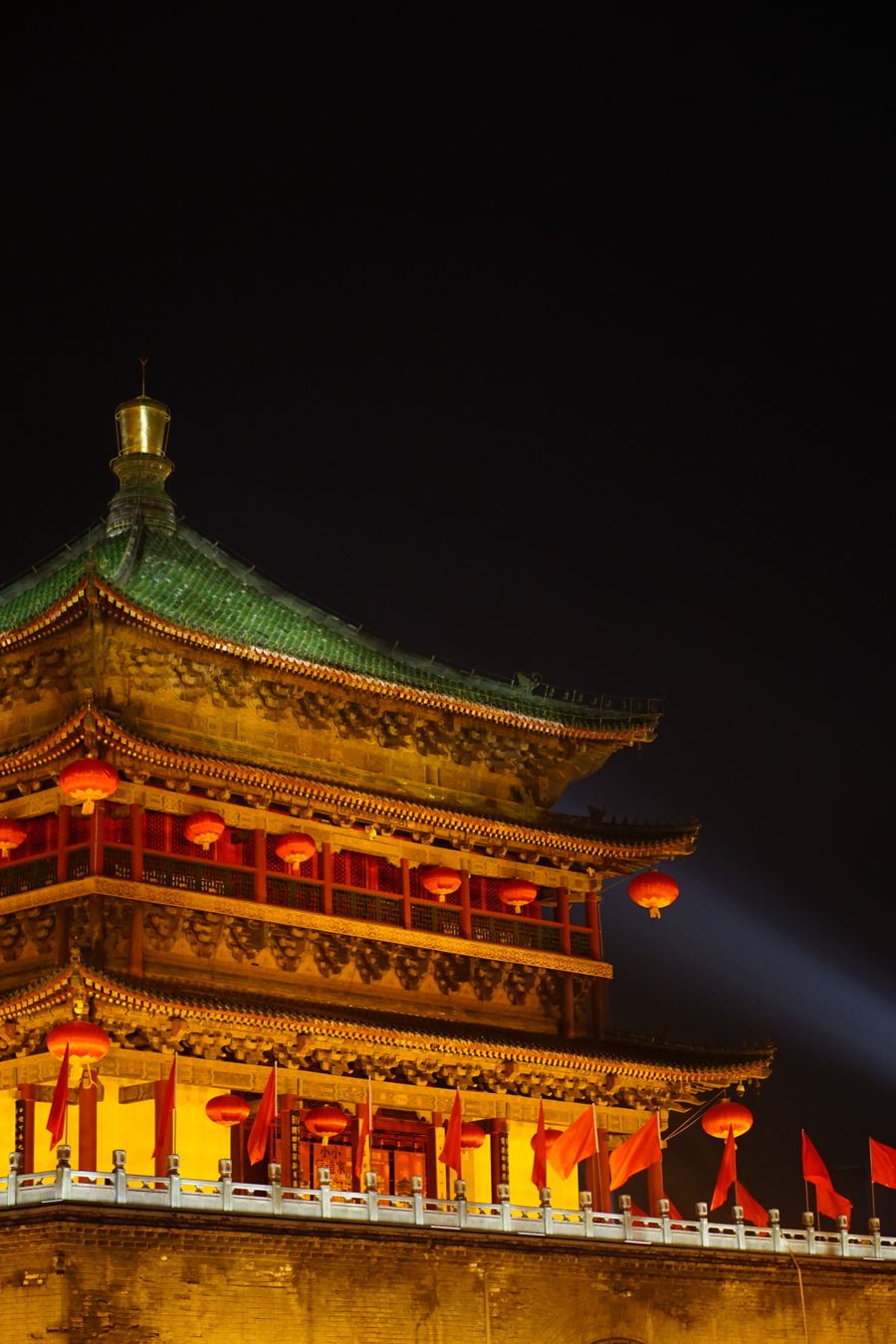
Xi'an turns 3,000 years of history into a nightly Tang-Dynasty spectacle.
2. From the Silk Road's start to the Belt and Road rail gateway.
Xi'an was Chang'an — the Tang Dynasty capital and the eastern starting point of the ancient Silk Road. In 138 BCE the envoy Zhang Qian set out from here and opened the route that carried Chinese silk west and brought back horses, music, and faith. Thirteen centuries later the city repeats the role in a different form.
The “Chang'an” China–Europe Railway Express runs from Xi'an International Port to Hamburg and Duisburg in 12–16 days, against a 40-day sea voyage, and on to Madrid, Łódź, and Moscow — more than 50 cities across Europe and Asia. In 2025 it made 6,037 trips, up 21.1%, moving 6.96 million tons. Westbound trains carry electronics, machinery, auto parts, and household goods; the eastbound return brings German cars, French wine, dairy, and timber — the same cargo logic as the old Silk Road, now in steel containers. The city that launched East–West trade 2,000 years ago is now the inland rail door between China and Eurasia.
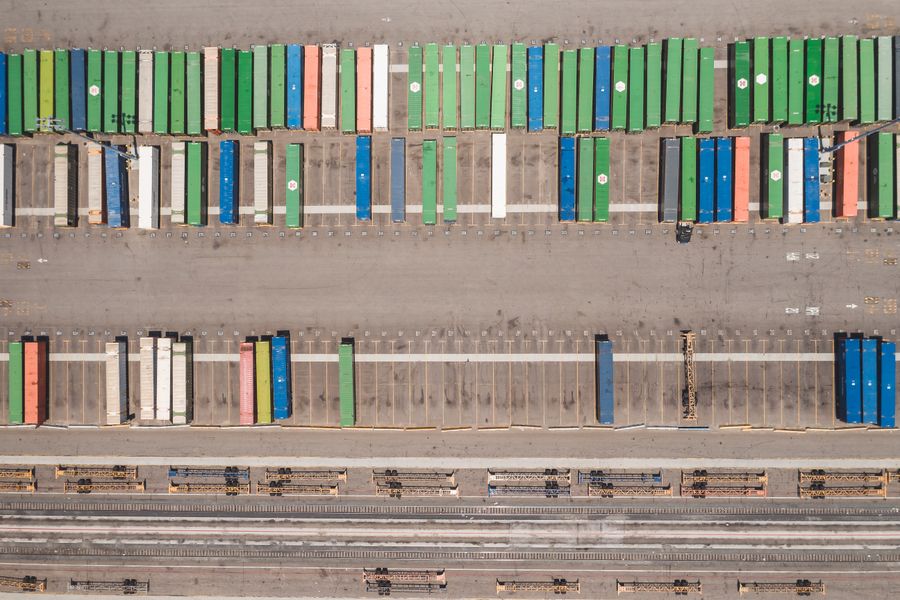
The “Chang'an” China–Europe Railway Express departs from Xi'an International Port.
3. It builds the chips, jets, and drones behind modern China.
Xi'an builds the hardware behind modern China. At Yanliang, the local aircraft maker forms over 35% of the C919 airframe — the country's homegrown passenger jet. Samsung's Xi'an plant, its only memory base outside Korea, turns out roughly 40% of global NAND on 260,000 wafers a month. The city is also a low-altitude-economy hub: 400-plus drone firms worth over $4.2 billion. You can feel that hard-tech atmosphere in a single afternoon: aviation museums, fab campuses, and drone zones that show why Xi'an is more than a tourist stop.
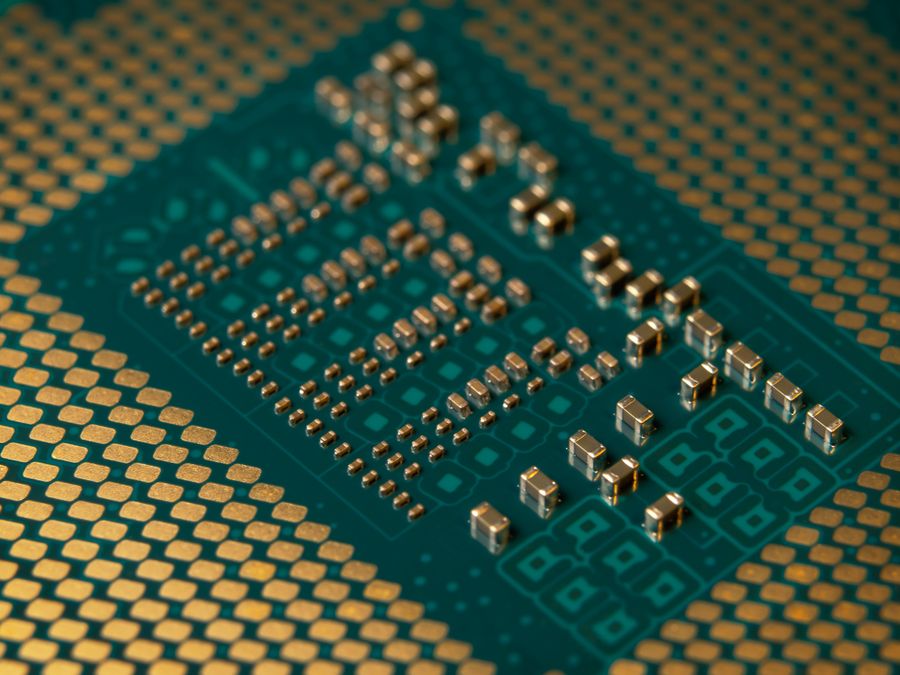
Samsung's Xi'an fab makes a large share of the world's NAND flash — silicon as Xi'an's newest export.
Xi'an's Other Face: the Vertical Short-Drama Capital
Xi'an's travel and entertainment scene has quietly spun off a new industry. Its mature tourism — night streets, Tang-court banquets, museums drawing hundreds of millions of visits a year — gave birth to a micro-short-drama boom: the city now makes an estimated 30–40% of all micro-short dramas produced in China, with 600-plus production companies and studios that shoot a finished vertical drama in about 25 days. The storytelling that fills Datang Never Sleeps City at night now fills phone screens worldwide — and the studios behind it are open to arranged visits.
The headline sights still deliver: the Terracotta Army, the Shaanxi History Museum, and the lantern-lit lanes of the Muslim Quarter — all open, all walkable, and easy to fit around a working day.
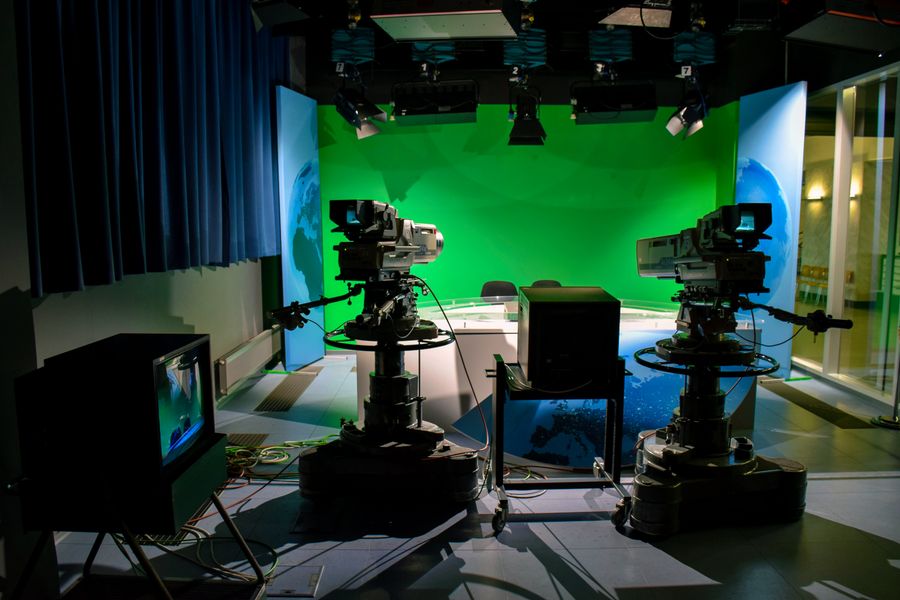
Xi'an's studios shoot a finished vertical short drama in about 25 days.
What You Can Actually See and Visit
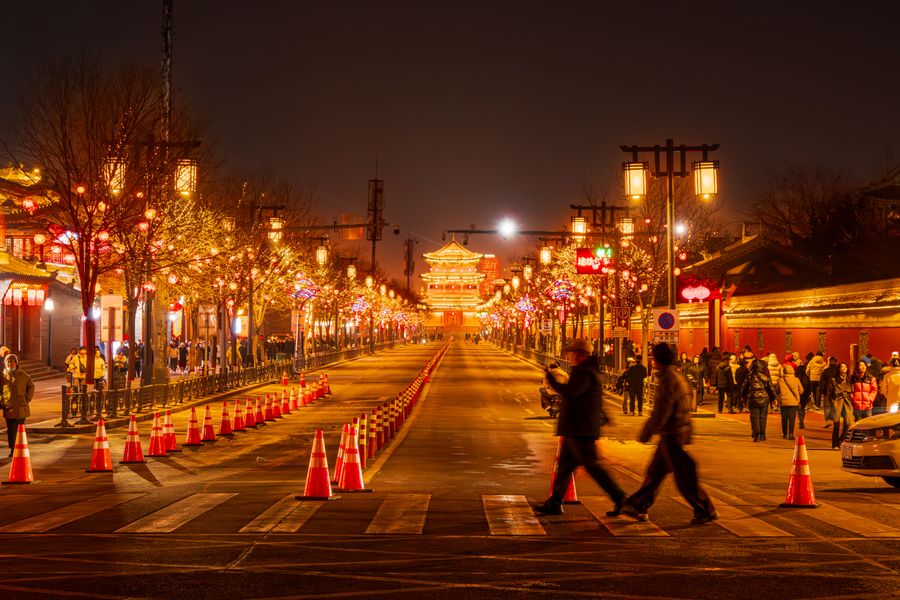
Datang Never Sleeps City Open to public
A free Tang-style street. Inside the same zone, the Daming Palace Banquet turns dinner into a Tang-court spectacle — dress in Tang costume, dine on Tang-style dishes, and watch live court music and dance.
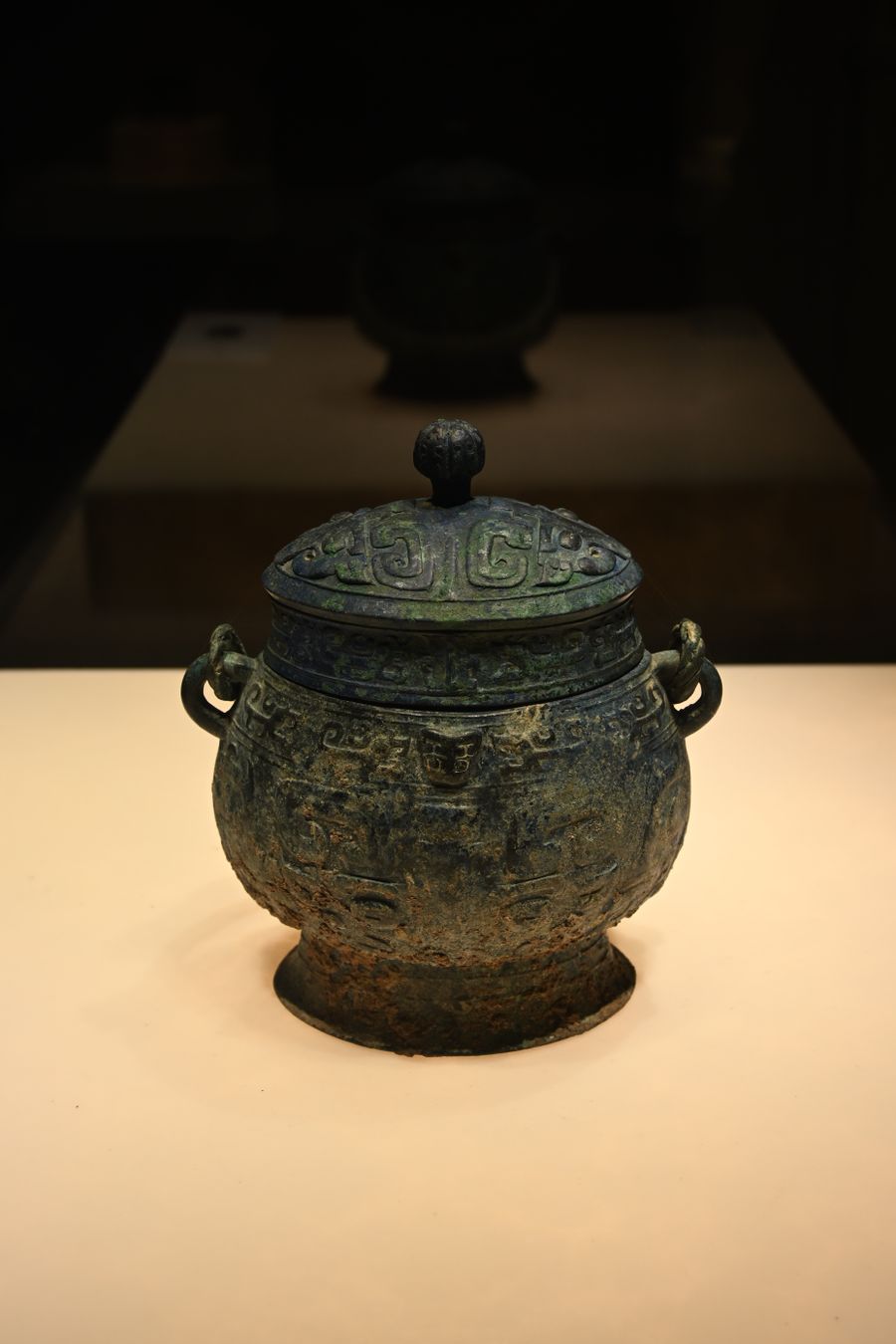
Shaanxi History Museum Open to public
One of China's best Tang and Zhou collections — gold, murals, bronze, and pottery across dynasties, in a purpose-built gallery in the city centre.
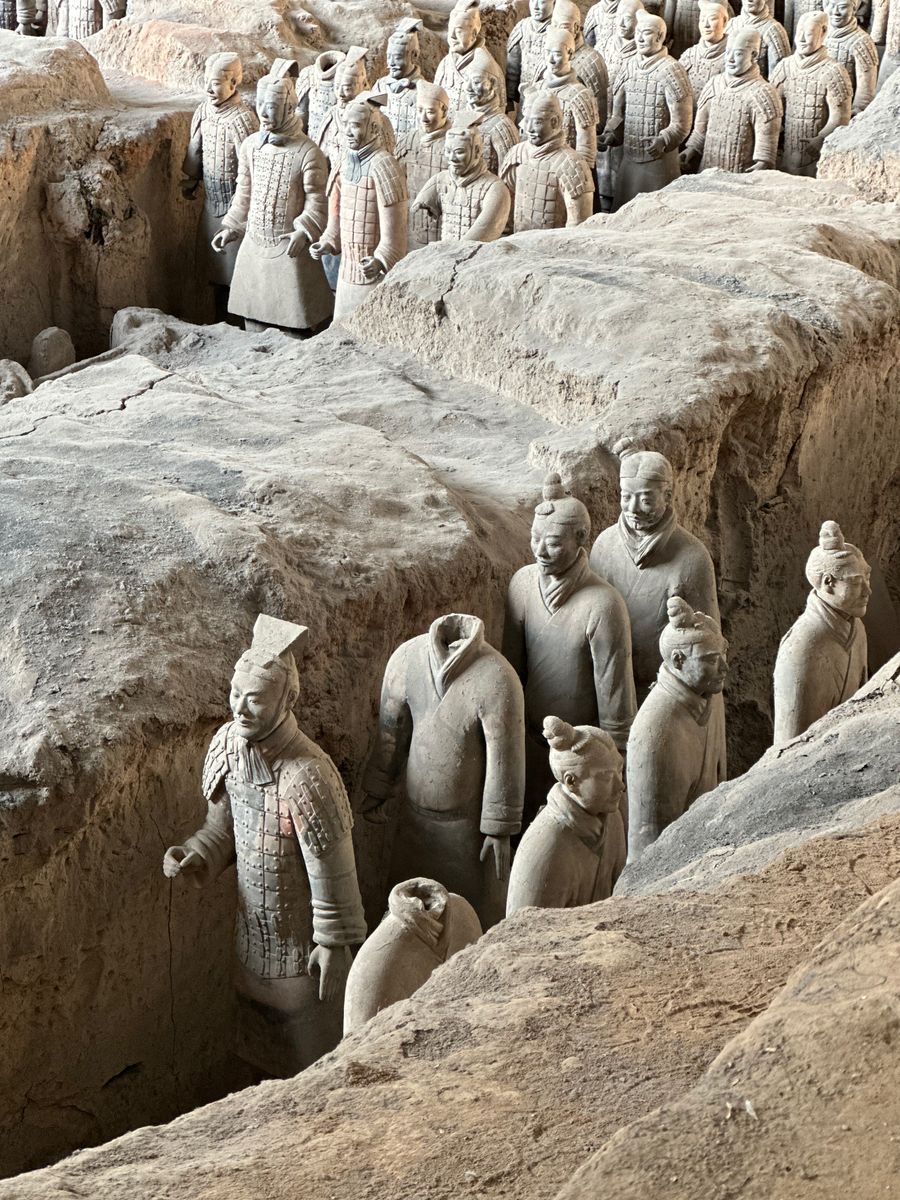
Terracotta Army Open to public
Emperor Qinshihuang's mausoleum — the 3rd-century-BC army of life-sized clay soldiers guarding China's first emperor. A UNESCO World Heritage site.

Xi'an International Port Rail Yard Arranged visit
The core hub of the “Chang'an” China–Europe Railway Express. View the rail yard, container handling, and the public exhibition hall.

Aviation Museum & Drone Park Arranged visit
Home to the C919 airframe base and Samsung's memory plant. The visit covers the aviation museum, industrial exhibition hall, and drone industrial park.

Short-Drama Studio & Production Base Arranged visit
Xi'an makes 30–40% of China's micro-short dramas — see the studio floors, green rooms, and post-production suites where 25-day shoots film the vertical dramas China binge-watches.
Being honest about access is part of our service: what's listed as "arranged" needs a business introduction — which is exactly what we do. Rail yards, fab campuses, and studio floors are employees-only. We never sell access that doesn't exist.
Want to see Xi'an's rail yard, chip fabs, and 3,000 years of history?
We design custom business trips to Xi'an and Shaanxi — tailored to your industry, your objectives, and your schedule. We handle company introductions, interpreter arrangements, factory and studio visits, and logistics. You focus on the insights.