Yiwu: The “World’s Supermarket” Behind the Empty-Suitcase TikTok Trend
The Chinese county city behind the viral “empty suitcase” trend and “Yiwu speed” — and the supply chain behind both.
Business Tours > Yangtze River Delta > Yiwu
Best for: Sourcing, Wholesale & Cross-border Trade

The ‘World Yiwu’ wall — the city’s most-photographed spot, and a fitting symbol for the place that stocks the world’s small goods.
The world’s largest small-commodity market: 80,000-plus booths, 8 million+ sqm, 2.1 million-plus products.
There is a local saying in Yiwu: you can read a U.S. presidential result here before the polls close. When one side’s MAGA hats, flags, and banners sell out first, the sellers take it as an early signal of who is winning. Folklore — but it shows how fast this county city ships the world’s political merch and holiday goods.
You have likely met Yiwu before its name was known. The viral “empty suitcase” TikTok trend — travelers leaving with two stuffed bags — began here. Two hours from Shanghai, one wholesale complex stocks over 2.1 million products, and roughly 60% of the world’s Christmas decorations start here.
To most foreigners, Yiwu is a shopping story. Beneath the hauls, it is one of the world’s key trade cities: it doesn’t make most of what it sells, but it sources toys, car parts, and everything between — at prices that shape global retail. In 2025 its GDP reached $38 billion, up 7.9%, and foreign trade hit $118 billion, up 25.1%. The hauls are half the story; the other half is “Yiwu speed” — a product trending on TikTok Monday can be prototyped by Wednesday and on a shelf by Friday, a live feed of global demand.
Yiwu doesn’t make the world’s small goods — it is where the world comes to buy them.
Yiwu at a Glance
$38B
2025 GDP, up 7.9% — a county-level city punching far above its size
2.1M+
Product types under one roof at the International Trade City
230+
Countries and regions the market trades with
3,005
Yixin’ou China–Europe freight trains run in 2025
Three Things Yiwu Does Better Than Almost Anywhere
1. It runs at “Yiwu speed.”
The International Trade City is the world’s largest small-commodity wholesale market and the home of “Yiwu speed.” Behind it, a network of small factories turns a TikTok trend into a shipped product in days: a sunflower balloon that went viral overseas was designed, prototyped, and shipping within 72 hours. In 2025 turnover hit $45 billion, up 15.2%, with 230,000 daily buyers, over 4,000 of them foreign. It has led China’s professional markets for 30-plus years, and the halls are open to foreign buyers who simply walk in.
Zhejiang China Commodities City Group

Over 80,000 booths — the physical marketplace where global buyers source.
2. It is where global trade actually happens.
A market is only as good as its trade, and Yiwu’s is dense. Some 15,000 foreign merchants live here year-round and 681,000 overseas buyers visited in 2025, up 19.7%. China’s 240-hour visa-free transit — with Yiwu airport now a port of entry — lets many combine a buying trip with a holiday. The digital layer runs just as deep: Chinagoods serves 5.5 million registered buyers, YiwuPay’s cross-border volume broke US$6 billion in 2025, up over 50%, and Yiwu’s “market procurement trade” model — a simplified export regime — has been copied in 39 markets across 22 provinces. Meet suppliers in person in the morning and test the same digital sourcing, payment, and export tools your rivals will use next year, all in one trip.

Inside the trade-city halls — where the digital layer (Chinagoods and YiwuPay) meets the physical market.
3. It is wired to Europe by rail.
Yiwu has no coastline, so it built its own artery to Europe. The Yixin’ou line ran 3,005 trains in 2025, up 14.7%, reaching 50-plus countries and 160-plus cities across 26 routes. Its Yiwu–Madrid service is the world’s longest rail-freight route at 11,505 km, covered in about 13 days. Since launch it has carried more than 16,000 trains and roughly 1.3 million containers of daily goods, machinery, and car parts.
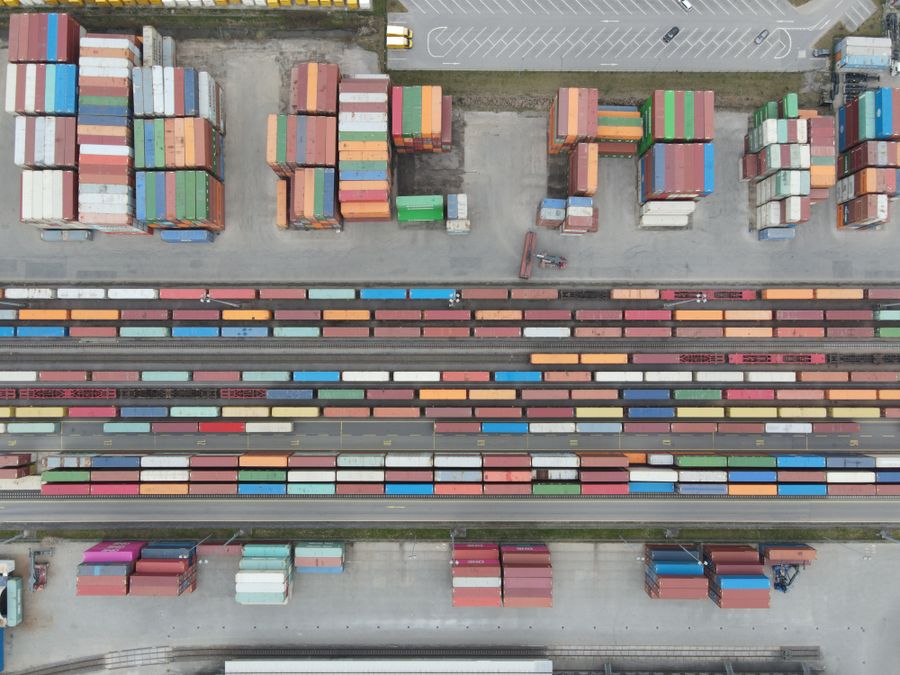
The Yixin’ou line — Yiwu’s self-built rail artery to Europe.
The Yiwu You’ll Want to See on the Side
Between deals, Yiwu has a softer side. Fotang Ancient Town, half an hour out, offers canal-side lanes and Ming-era shops — a calm break from the market. Back in the city, the Binwang “world food street” lines up Arabic, African, and Turkish restaurants — the easiest place in China for a Syrian lunch between appointments, thanks to the 15,000 foreign merchants living here. Local snacks are worth a stop: paper-thin Donghe meat pies, Yiwu brown-sugar twists, and glossy southern dates — specialties found nowhere else. All sit a short taxi or metro ride from the market.
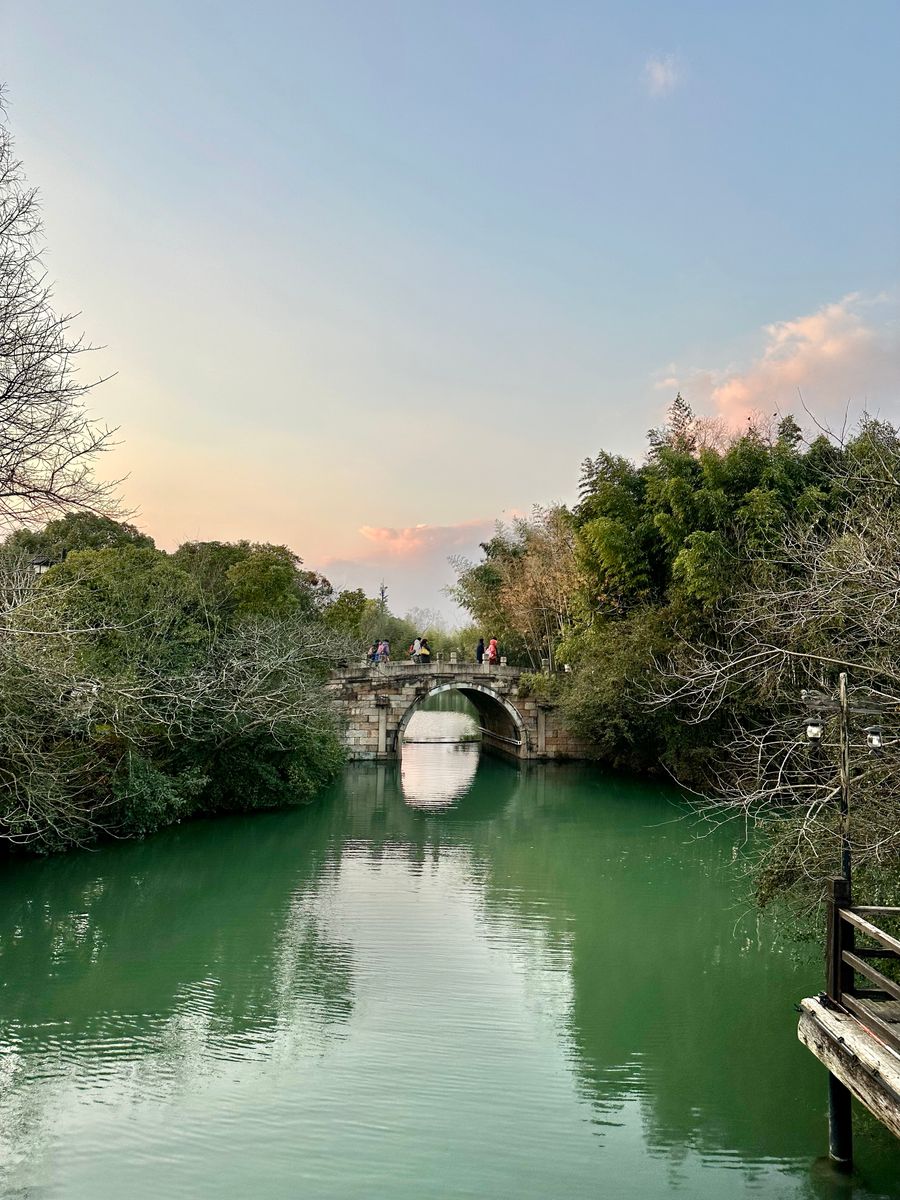
Fotang Ancient Town — canal-side lanes and Ming-era shopfronts, half an hour from the market.
What You Can Actually See and Visit
Yiwu International Trade City Open to public
Over 80,000 booths of toys to hardware — the world’s largest wholesale market and a 4A attraction.
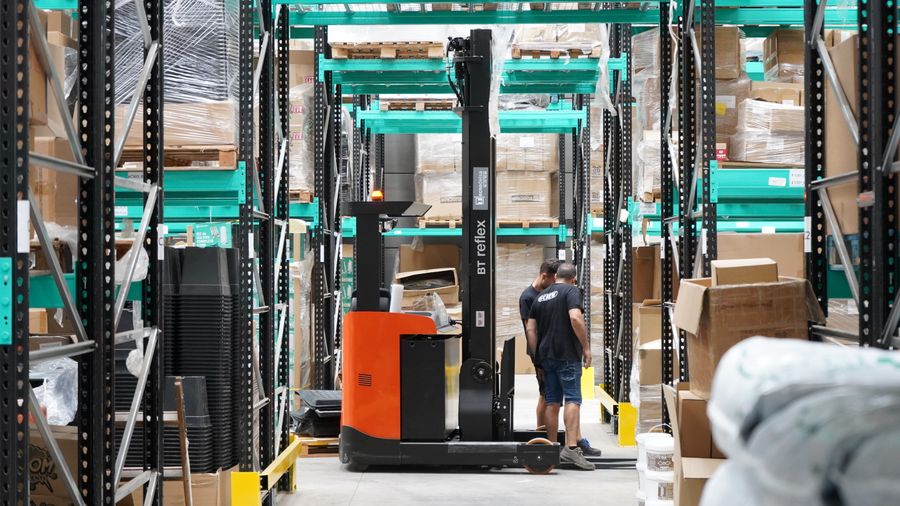
Bonded Zone: Digital Hall & Smart Sorting Arranged visit
The bonded zone’s digital exhibition hall, cross-border e-commerce warehouse, and smart sorting line — the zone handled over 100 million cross-border import orders in 2025.
Chinagoods & YiwuPay Trade Center Arranged visit
Where Chinagoods and YiwuPay run the city’s digital trade — live demos of the sourcing, payment, and export tooling buyers use worldwide.

Factory Floors & Supplier Showrooms Arranged visit
Inside Yiwu’s wholesale ecosystem, walk factory floors and supplier showrooms behind the stalls and see how samples become bulk orders.
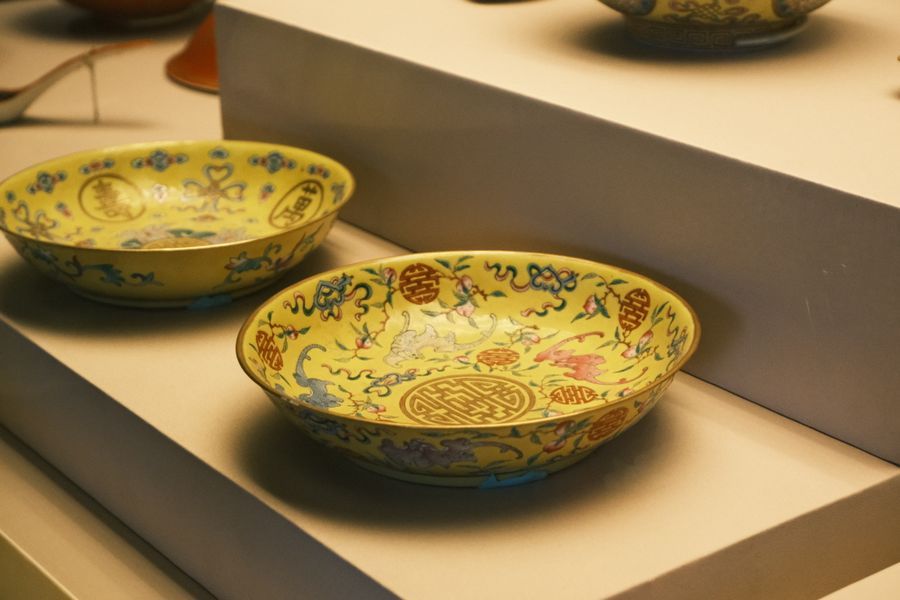
Yiwu Museum Open to public
The city’s story as a trading town, from “chicken-feather-for-sugar” peddlers to today’s global market — a quick primer before the stalls.
Fotang Ancient Town Open to public
A canal-side old town with Ming-era shops, white-cut mutton, and slow lanes — a relaxed counterpoint to the market, half an hour out.
Being honest about access is part of our service: what’s listed as “arranged” needs a business introduction — which is exactly what we do. Factory floors, port operations, and customs-supervised zones are not tourist attractions anywhere in the world, and we won’t pretend otherwise.
Want to experience Yiwu’s wholesale engine in person?
We design custom business trips to Yiwu and the Yangtze River Delta — factory and supply-chain introductions, market and cross-border-trade visits, interpreter arrangements, and the freight line to Europe. We handle the company introductions, arranged visits, and logistics. You focus on the insights.